
Emotional Design Elements of Product Satisfaction
Abstract
Background How can the differences between users’ emotional responses and their actual purchasing decisions be quantified? What elements constitute the key elements of users’ satisfaction? Are both emotional and rational elements fully represented within these elements? To address these research questions, this study aims to develop a comprehensive evaluation model that systematically analyzes the core product design elements influencing users’ purchasing decisions and uncovers the interaction mechanisms among these elements.
Methods Through a systematical literature review, the key elements influencing consumer satisfaction, encompassing both product design and emotional design fields, are identified in this study. Subsequently, the Delphi method is employed to filter representative key design elements. Based on this, structural equation modeling (SEM) is utilized to analyze the interrelationships among these elements and their pathways to user satisfaction.
Results Eight design elements, such as aesthetic appeal, core function, and price, are identified as the primary influences on user satisfaction in the study. SEM analysis reveals significant direct and indirect relationships among these elements. For example, enhancing aesthetic appeal significantly improves users’ positive perceptions of core function, and this enhancement can be achieved by optimizing elements such as surprise and delight, cultural connotations, and material selection.
Conclusions The comprehensive evaluation model developed in this study systematically quantifies the significance of both emotional and rational elements in purchasing decisions, while also revealing the interaction mechanisms among key elements. The findings offer a scientific basis for optimizing product design strategies, enhancing user satisfaction, and improving market competitiveness.
Keywords:
Emotional Design, Product Design, Satisfaction, SEM1. Introduction
When an electric juicer and the Alessi juicer are placed on the shelf simultaneously, users are invariably drawn to the Alessi juicer. However, the fact that only 500,000 units of the Alessi juicer have been sold globally in the 13 years since its launch indicates that consumers frequently opt for electric juicers from established brands like Philips. What accounts for the discrepancy between products that elicit emotional responses from users and the products they ultimately choose to purchase? What elements influence consumer satisfaction and, consequently, affect their purchasing decisions?
Currently, rational elements of products, such as functionality and materials are emphasized in most consumer satisfaction studies, while the systematic role of emotional design is given less attention to. In fact, emotional design not only enhances the user experience but also fosters a deeper connection among users, products, and designers, directly influencing user loyalty (Brom, Starkova, & D’Mello, 2018). Furthermore, emotional elements do not exist in isolation; their impact is dynamic and complex, necessitating interaction with other design elements of the product to fully comprehend consumer satisfaction (Alaniz & Biazzo, 2019).
Therefore, this study aims to identify key evaluation elements of emotional design and product design, establish a comprehensive evaluation model, assess users’ rational and emotional satisfaction, and explore the impact of these elements on users’ purchasing decisions. This research provides a scientific basis for integrating emotional and rational elements in the product design process, thereby laying the foundation for enhancing consumer satisfaction and increasing users’ willingness to make purchases.
2. Methods
This study employs a combination of quantitative and qualitative methods. First, a literature review is conducted to summarize the elements influencing product and emotional design, thereby establishing the theoretical foundation for the research. Next, the Delphi method is utilized to identify the core design elements that affect user purchasing decisions, ensuring the accuracy and scientific validity of these elements. Finally, a structural equation model (SEM) is employed to verify the effectiveness, significance, and interrelationships of the core elements, systematically analyzing the impact of each element on user purchase intention. This methodology aims to provide a scientific basis for optimizing product design strategies and enhancing consumer satisfaction and purchase intention.
3. Literature Review
3. 1. Consumer Satisfaction
Consumer satisfaction is a crucial factor that influences customer loyalty and corporate profitability (Ihtiyar, A., 2018). It arises from the emotional responses consumers experience after comparing the actual performance of a product with their expectations, which can result in either pleasure or disappointment (Herrmann, A., Huber, F., & Braunstein, C., 2000). Oliver (1980) defined consumer satisfaction as the outcome of comparing product performance with customer expectations (Oliver, R. L., 1980). While consumer satisfaction cannot be measured directly, it can be assessed indirectly through various indicators or variables (Johnson, M. D., & Fornell, C., 1991). In product design, consumer satisfaction typically encompasses a dual dimension of rational and emotional needs (Chitturi, R., Raghunathan, R., & Mahajan, V., 2008), indicating that it is essential to break consumer satisfaction down into more detailed dimensions.
In examining the relationship between consumer satisfaction and product design, affective engineering is a widely utilized method that translates users’ perceptions of a product into specific design elements. However, due to its intricate concepts and the absence of effective models, accurately predicting consumer satisfaction remains a challenge (Nagamachi, 1995). Conversely, the Kano model enhances design decisions by prioritizing essential design elements that impact satisfaction; however, it still faces limitations when addressing cross-category standards and complex nonlinear relationships (Chen & Chuang, 2008).
Research on consumer satisfaction is extensive; however, the academic community has not yet to establish a unified definition of “product consumer satisfaction”. To ensure the accuracy of core concepts in subsequent research, product consumer satisfaction (PCS) is defined as the overall feeling of pleasure or disappointment that users experience after thoroughly evaluating both rational and affective elements of a product in this study. This definition encompasses rational elements, such as quality and material, as well as affective elements, including emotional resonance and aesthetic preferences, thereby reflecting the overall performance of a product in meeting user needs.
Based on this, product and emotional design elements are extracted to examine their impact on user purchasing decisions in the study. The goal is to provide a scientific foundation for optimizing product design and enhancing PCS.
3. 2. Emotional Design Elements
Emotional design emphasizes that product design should not only address functionality but also build meaningful emotional connections with users. To analyze emotional design systematically, this study identifies six core elements—Aesthetic Appeal, Universal Usability, User-Centered Design, Surprise and Delight, Customization, and Emotional Arousal—derived from an extensive literature review. Below is a discussion of each element, supported by relevant research.
(1) Aesthetic Appeal
Aesthetic appeal focuses on the sensory and visual attractiveness of a product, triggering immediate emotional responses. Sonderegger and Sauer (2010) highlight that visually pleasing designs create positive first impressions, enhancing perceived usability and satisfaction. Udris-Borodavko et al. (2023) further suggest that aligning aesthetic elements with users’ cultural and personal preferences fosters deeper connections.
(2) Universal Usability
Universal usability ensures that products are accessible and easy to use for diverse users. Hassenzahl (2018) emphasizes that usability reduces frustration and cognitive load while supporting emotional satisfaction. Similarly, Shneiderman (2000) notes that universal usability appeals to a broader audience, enhancing product marketability.
(3) User-Centered Design
User-centered design prioritizes users’ needs, preferences, and daily routines (Kim & Christiaans, 2016). Tongsubanan and Kasemsarn (2024) argue that this approach enhances user satisfaction by ensuring product relevance. Rane et al. (2023) add that integrating user feedback during the design process improves loyalty and emotional engagement. Ruthven (2021) supports this by highlighting how user-centered design aligns functionality with emotional resonance.
(4) Surprise and Delight
Surprise and delight involve unexpected features that evoke joy and astonishment. Desmet (2012) identifies this as a key element of emotional design. Chaudhuri et al. (2010) find that hedonic benefits derived from surprises significantly improve user perceptions. Lindgreen and Vanhamme (2003) emphasize that surprise elements make products memorable and engaging.
(5) Customization
Customization allows users to tailor products to their preferences, fostering self-expression and ownership. Hofmann (2024) highlights its role in enhancing emotional engagement, while Pardini et al. (2022) note that personalization strengthens user attachment. Shanahan et al. (2019) further emphasize that customization promotes brand loyalty through emotional connections.
(6) Emotional Arousal
Emotional arousal refers to evoking strong emotions, such as nostalgia, excitement, or joy, through design. Le (2020) highlights its role in creating lasting impressions. Noble and Kumar (2008) find that emotionally engaging designs deepen user connections, while Miniero et al. (2014) note that arousal enhances the pleasure of product interaction.
Norman (2007) proposed three levels of emotional responses: visceral, behavioral, and reflective. Building on this framework, emotional design elements can be grouped into three categories based on their roles in user experience: Aesthetic, Functional Usability, and Experiential elements.
Aesthetic levels (e.g., Aesthetic Appeal, Emotional Arousal) operate at the visceral level, triggering sensory and visual reactions that create strong first impressions. Functional Usability levels (e.g., Universal Usability, User-Centered Design) focus on practical needs during interaction, enhancing usability and behavioral satisfaction. Finally, Experiential levels (e.g., Surprise and Delight, Customization) engage users at the reflective level, fostering deeper connections through personalization and long-term emotional bonds. This structured approach ensures clarity and coherence in understanding how design influences user experience across different emotional dimensions.
Table 1 presents the six core emotional design elements identified through a systematic literature review. These elements highlight the multidimensional aspects of emotional design that contribute to user satisfaction. Each element is defined with its specific focus, such as how “surprise and delight” aims to create unexpected joyful experiences, while “customization” enhances users’ sense of self-expression. This table forms the foundation for further expert evaluation using the Delphi method.

Emotional Design Elements
3. 3. Product Design Elements
Product design elements primarily focus on addressing the functional and rational aspects of user satisfaction. The selection and definition of product design elements in this study are based on a comprehensive review of well-established studies in the fields of design, usability, and user experience. Each element was carefully chosen for its proven relevance to user satisfaction and its role in shaping both the functional and experiential aspects of product interaction. Below are the justifications for each identified element.
(1) Aesthetic Appeal
Aesthetic appeal is widely recognized as a key factor in influencing user perception and satisfaction. Toufani et al. (2017) demonstrate that visual and tactile qualities, such as colors and shapes, play a significant role in forming positive first impressions. Homburg et al. (2015) further argue that aesthetic appeal enhances product desirability in competitive markets, making it an essential consideration in product design.
(2) Taste
Taste refers to aligning a product’s features with users’ cultural and personal preferences (Holbrook & Schindler, 1994). Designing for taste ensures products resonate with diverse users, enhancing satisfaction while respecting cultural identities (Allen, Gupta, & Monnier, 2008).
(3) Usability
Usability is fundamental to product performance and user satisfaction (Hassenzahl, 2018). Lin et al. (2022) argue that intuitive features, such as ergonomic designs, reduce user frustration and enhance efficiency. Additionally, Still and Still (2018) stress the importance of universal usability in broadening a product’s appeal across diverse user groups, establishing usability as a critical design element.
(4) Materials
Materials are treated as a standalone element because they bridge function and aesthetic appeal (Ashby & Johnson, 2013). Unlike function or aesthetic appeal alone, materials uniquely influence both practical performance and emotional engagement (Kumar et al., 2015).
(5) Sensory
Sensory experience includes the physical sensations evoked during product interaction, such as touch, sound, and smell. Brom et al. (2018) emphasize that pleasant sensory inputs can create emotional engagement and deepen user attachment to a product.
(6) Function
In product design, function includes both hard functions and soft functions. Hard functions address the physical and operational aspects, such as construction, durability, and usability, ensuring the product meets its intended purpose. Soft functions, on the other hand, focus on sensory and emotional dimensions, like tactile qualities and aesthetic appeal (Alonso-Rasgado et al., 2004).
Table 2 summarizes six product design elements identified through a literature review: aesthetic appeal, taste, usability, materials, sensory, and function. These elements are recognized for their relevance to product design and user satisfaction. Aesthetic appeal and sensory experience enhance visual and tactile interaction, usability ensures simplicity and accessibility, materials affect functionality and perceived quality, taste aligns design with cultural preferences, and function ensures operational reliability. Together, these elements capture key considerations in product design.
Product Design Elements
4. Comprehensive Analysis of Design Elements
The relationship between emotional and product design elements is both complex and dynamic, shaped by various elements that go beyond a simple one-to-one mapping. Emotional responses are not solely determined by individual product features; instead, they emerge through interactions between product attributes, user characteristics, and specific situational contexts (Persada, 2018). For example, a visually engaging design (emotional element) may evoke positive emotions (Plass et al., 2014), but its impact on overall satisfaction depends on how it integrates with usability (product element) and aligns with the user’s immediate goals or cultural preferences.
Among the design elements, “aesthetic appeal” and “universal usability” stand out as overlapping elements that influence both emotional and rational dimensions. These elements serve as connectors between emotional and product design, forming a foundation for user satisfaction. For instance, “aesthetic appeal” enhances emotional engagement by creating visually attractive experiences while simultaneously improving product usability through better clarity and intuitiveness. Similarly, “universal usability” ensures ease of use across diverse user groups, bridging emotional satisfaction with functional performance.
The study adopts the user experience process as a framework to analyze how design elements evoke emotional and rational responses (Moustafa, 2023). This process considers three key dimensions: user characteristics, including prior experiences, cultural preferences, and expectations that shape individual reactions (Maiocchi & Pillan, 2011); product features, focusing on the interaction between functional and aesthetic attributes that influence perceptions (McDonagh et al., 2002); and contextual influences, such as the usage environment and specific tasks, which mediate the overall impact on user satisfaction (Deng et al., 2010).
By integrating these dimensions, the analysis highlights how emotional and product design elements interact to shape user satisfaction, emphasizing the role of dynamic elements in enhancing the user experience (Allam & Dahlan, 2013).
Figure 1 illustrates the integration of emotional and product design elements within the user experience process, emphasizing their dynamic interactions across three key dimensions: user characteristics, product features, and contextual influences. The figure highlights the overlapping and distinct areas between emotional and product design, with aesthetic appeal and universal usability identified as critical connectors bridging emotional satisfaction and functional performance.
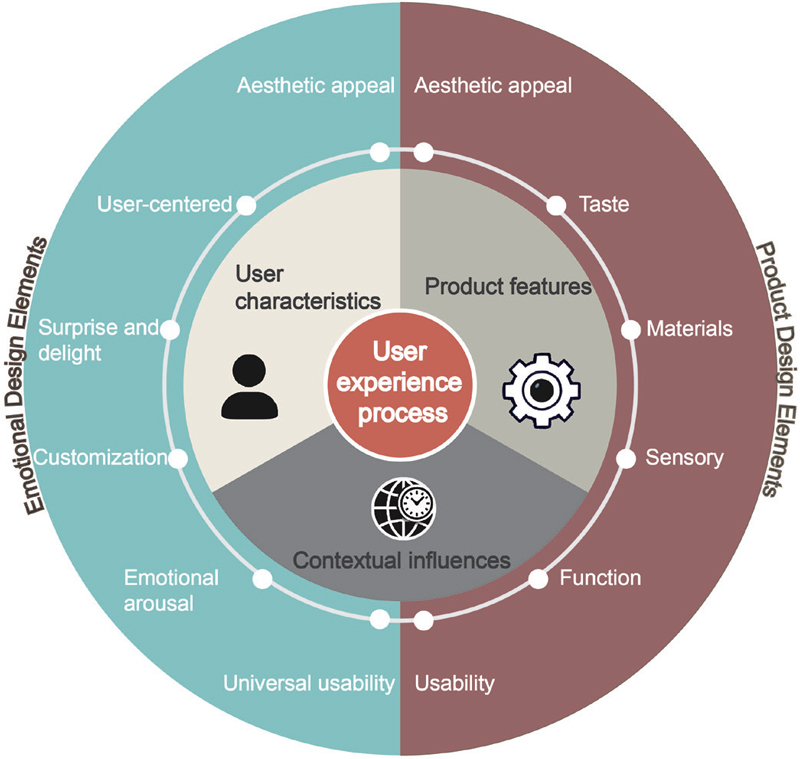
Design Elements’ Integration
This visual representation underscores how emotional and rational design elements interact dynamically, influenced by individual user preferences, situational contexts, and product attributes. By integrating these dimensions, the model demonstrates how emotional and product design elements collectively shape user satisfaction and purchasing decisions. This framework serves as a foundation for developing a comprehensive evaluation model that captures the complexity and interdependence of these design elements.
4. 1. Delphi Method Analysis
To develop a comprehensive evaluation model, this study employed the Delphi method to identify and refine the key design elements influencing user perception and purchasing decisions. The Delphi method was chosen for its ability to systematically synthesize expert opinions, ensuring the scientific rigor and accuracy of the evaluation process, particularly in addressing the complex interplay between emotional and product design elements.
The expert panel comprised 11 professionals in product design, service design, and product design engineering, combining over 10 years of industry experience from practitioners and more than 15 years of research expertise from senior academics. This diverse group, including representatives from China (7), South Korea (2), and India (2), ensured a balanced understanding of theoretical, practical, and cultural perspectives. To address translation challenges, materials were professionally translated and reviewed by bilingual design experts for technical and linguistic accuracy. Feedback from local experts refined culturally sensitive content, and small-scale testing in each country ensured clarity and applicability, leading to final adjustments for reliability across cultural contexts.
The Delphi process involved three iterative rounds to achieve a convergence of expert opinions. In the first round, experts rated the importance of each design element on a 1–7 scale (1 = “not important at all,” 7 = “extremely important”) and were encouraged to suggest additional elements. Statistical analyses, including mean, standard deviation, and coefficient of variation, were conducted to assess the level of agreement among experts. Elements with lower consensus or insufficient importance were revised or excluded in subsequent rounds, resulting in a refined and scientifically validated set of key design elements.
This iterative and structured approach ensured that the identified design elements accurately represented the elements influencing user satisfaction and purchase decisions. The integration of diverse expertise, career stages, and geographical representation strengthened the validity and applicability of the evaluation model.
Table 3 summarizes the statistical results of the first round of the Delphi method. It includes key metrics such as mean, standard deviation, and coefficient of variation (CV) for each design element. Elements with high CV values indicate significant disagreement among experts, leading to their refinement or removal in subsequent rounds. Typically, a CV value greater than 1 indicates a lack of consensus among experts. The calculation method is as follows:
The First Round of Delphi Statistical Results
S = standard deviation, X = mean
The results demonstrate that the CV values for emotional and product design elements do not exceed 1, indicating overall stability in the data. However, emotional arousal (CV = 0.32) and sensory elements (CV = 0.28) exhibit relatively high variability, suggesting significant disagreement among experts on the importance of these aspects. Conversely, elements such as universal usability (CV = 0.04), usability (CV = 0.07), and aesthetic appeal (CV = 0.11) show low CV values, reflecting a high level of consensus on their importance.
According to the scoring criteria, elements with a score below 5 were considered less important and eliminated in the second round. These include customization (x=4.82), emotional arousal (x=4.18), and senses (x=4.82). Experts also identified overlapping definitions, such as merging “aesthetic appeal” and “universal usability” with corresponding elements. Furthermore, newly suggested elements—“price,” “cultural connotation,” “fashion trends,” and “recyclability”—were incorporated into the revised questionnaire. “Price” was added due to its significant influence on purchasing decisions, “cultural connotation” for its role in building emotional connections, and “recyclability” as a response to growing consumer interest in sustainability.
Table 4 presents the outcomes of the second Delphi round after the initial refinement. The table includes revised definitions and scores for each design element. This step further consolidates expert agreement on the importance of the elements and ensures that less significant elements are excluded from the evaluation model.
The Second Round of Delphi Statistical Results
The results of the second round revealed that the mean values for taste (x = 4.50) and fashion trends (x = 4.20) were significantly lower than those of other elements. The low coefficient of variation (CV) values indicated strong agreement among experts regarding their limited relevance. Experts argued that these elements are highly subjective and context-dependent, making them unsuitable for broad application in design evaluation. Consequently, “taste” and “fashion trends” were recommended for removal.
In addition, experts suggested refining “function” to “core function” to emphasize its dual role in product design. Core function addresses both the physical and utilitarian aspects, such as usability and durability, as well as emotional and aesthetic dimensions, such as user connection and visual appeal. This ensures a comprehensive focus on elements that are essential to performance and user experience.
Meanwhile, elements such as materials (x = 4.90, CV = 0.18), cultural connotation (x = 4.90, CV = 0.20), and recyclability (x = 4.80, CV = 0.16) received slightly lower mean scores but exhibited higher CV values, reflecting divergent expert opinions on their importance. Although retained for further analysis, these elements were noted as secondary considerations in future evaluations.
At the end of the second round, irrelevant elements such as “taste” and “fashion trends” were removed, and enhancing conceptual clarity with the introduction of “core function.” The updated list formed the basis for the third Delphi round (Table 5), during which experts reevaluated the refined criteria. The recalculation of mean scores and CV values in this phase further ensured convergence of expert opinions and provided a more focused understanding of the key design elements.
The Third Round of Delphi Statistical Results
The results of the third round indicate that, with the exception of recyclability, the mean values for the other elements are all 5 points or higher, and the CV values are all below 0.15. This suggests that the experts have a consistent opinion regarding the significance of these elements. The experts acknowledge that while recyclability is an important sustainability indicator, its direct impact on user experience and satisfaction is relatively weak, leading them to recommend its removal.
In summary, the Delphi method identified and refined key elements of product emotional design based on expert consensus, providing a scientific foundation for quantifying PCS and constructing the evaluation model. These elements, listed in Table 6, integrate emotional and rational aspects, with each defined to highlight its unique contribution to user satisfaction. This finalized list serves as the basis for constructing the structural equation model (SEM) and optimizing the product experience.
Key Design Elements of Product
To illustrate the iterative refinement process, Table 7 summarizes the objectives, processes, and outcomes of each Delphi round. The table highlights how expert consensus was achieved through systematic evaluation, with key design elements being identified, refined, and finalized across three rounds. This iterative approach ensured the scientific rigor and validity of the resulting list of elements, forming a robust foundation for model construction and the optimization of product emotional design.
Delphi Method Summary with Key Elements
4. 2. Model Analysis
The case validation of this study aims to verify the interrelationships among eight key elements in product customer satisfaction (PCS) using mobile phones as examples. By integrating quantitative analysis with users’ intuitive perceptions, the study ensures both the scientific validity of the results and the authenticity of the user experience.
The structural equation model (SEM) was employed in this study due to its ability to simultaneously analyze multiple interrelated variables and their direct, indirect, and mediated effects. SEM is particularly suited for exploring the complex relationships between emotional and rational design elements, user satisfaction, and purchasing decisions. By incorporating latent variables and observed data, SEM allows for a comprehensive assessment of the influence pathways among key design elements, ensuring the scientific validity and reliability of the evaluation model. This methodology provides robust insights into the dynamic interplay of design elements, which would be difficult to capture using traditional statistical techniques.
To scientifically apply structural equation modeling (SEM) in determining the relationships between design elements influencing PCS, the Delphi method was utilized to identify eight key design elements and their corresponding definitions.
Table 8 lists measurement variables derived from the Delphi-confirmed definitions of each design element. These variables align with expert-agreed definitions, ensuring consistency and accuracy in capturing user perceptions for the SEM.
PCS Key Elements’ Measurement Scale
For the SEM analysis, the same 11 experts from the Delphi process were invited to hypothesize initial relationships among the key design elements identified earlier. Their deep understanding of the design elements and their definitions made them well-suited for this task, ensuring the theoretical foundation of the SEM model was both comprehensive and credible. The primary goal of this step was to clarify the interactions among elements, identify influence paths, and determine how these relationships enhance PCS and inform user purchase decisions.
The SEM analysis began with an in-person workshop where the 11 experts collaboratively discussed and organized potential causal relationships. Using sticky notes and a whiteboard, the experts mapped out their hypotheses based on their domain knowledge and insights from the Delphi process. This participatory approach ensured that the proposed relationships reflected both theoretical rigor and practical applicability. The result of this session formed the initial version of the relationships, as depicted in Figure 2.
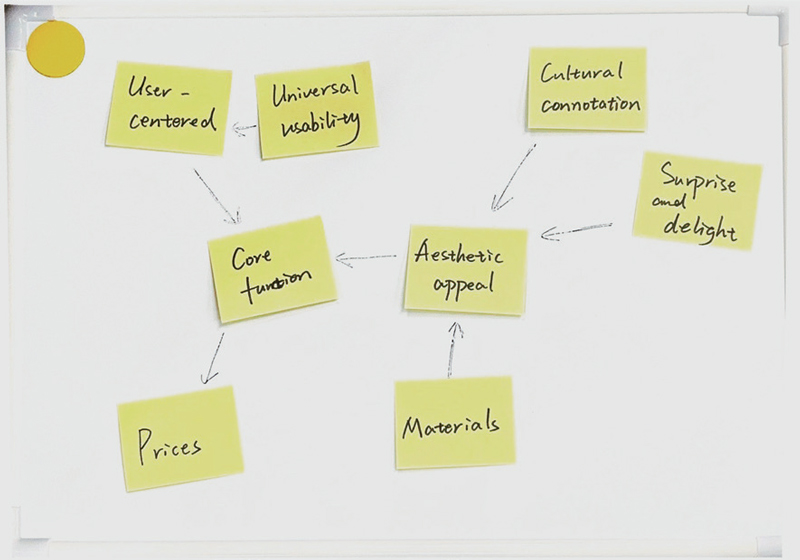
Elements’ Relationship
Figure 2 illustrates the hypothesized relationships among the eight design elements. For instance, aesthetic appeal is posited to influence surprise and delight, as visually and tactually appealing designs evoke positive emotional responses. Conversely, the reverse relationship was excluded, as emotions such as surprise and delight are typically outcomes rather than causes of visual and sensory features. Similarly, materials are hypothesized to precede aesthetic appeal, emphasizing their role in shaping sensory and visual qualities. Other relationships, such as core function being influenced by user-centered design and universal usability, underscore the importance of practical considerations in guiding functionality.
To ensure transparency and accuracy, all materials used during the workshop—such as predesigned templates, sticky notes, and structured guidelines—were thoroughly documented. The outputs of this workshop provided the foundational hypotheses for subsequent SEM validation. Following this, a Likert-scale questionnaire was designed to gather user evaluations of the defined elements and their hypothesized relationships. The collected data were analyzed using SEM to validate the influence paths and quantify the impact of each design element on PCS and purchasing decisions.
By integrating expert input from the Delphi method with systematic SEM validation, this study establishes a scientifically grounded and empirically supported model. The participatory nature of the expert workshop, combined with robust data analysis, offers a clear and reliable framework for understanding the interplay of design elements in enhancing PCS.
To validate the proposed relationships and gain deeper insights into the interactions among design elements, mobile phones were selected as the case study for this phase. Mobile phones were chosen due to their ubiquity and dual integration of functional and emotional design elements, making them an ideal subject for examining user satisfaction (Lottridge, Chignell, & Jovicic, 2011). The competitive nature of the mobile phone market, coupled with diverse design strategies employed by manufacturers, provides a rich context for exploring consumer preferences and purchase decisions (Sun & Han, 2010). Additionally, mobile phones are universally recognized and widely used, offering high levels of consumer engagement that ensure the findings are relevant to other product categories with similar characteristics (Shin, 2014).
While mobile phones provide a robust foundation for testing the proposed model, we acknowledge the limitations of focusing solely on this product category. Future research will address this by expanding to other product types, which also integrate functional and emotional design elements. These additional cases will enable the model to capture a wider range of user experiences and improve its generalizability across diverse products and environments.
A Likert-scale questionnaire was designed to allow respondents to evaluate the significance of the key design elements influencing PCS. The survey targeted users from China, South Korea, and India, selected to correspond with the Delphi method’s expert panel and to ensure representativeness. These three countries were chosen for their strong smartphone markets, reflecting diverse cultural and economic contexts, as well as their significant roles in shaping global mobile phone usage trends.
Basic information about the respondents, as well as importance scores for the measurement variables corresponding to the eight design elements is gathered in the questionnaire, resulting in a total of 110 valid responses. The overall findings are summarized in the Table 9.
Demographics
Key demographic information—age, gender, and usage experience—is crucial for understanding the product’s emotional design elements and reveals user group preferences. Among these, usage experience was divided into four stages: novice, average, skilled, and expert. This classification reflects varying levels of user interaction with mobile phone features, ranging from basic operation to advanced functionality. By segmenting users in this way, the analysis ensures a comprehensive understanding of how different levels of experience contribute to perceptions of key design elements, such as usability and core function. This segmentation provides a robust basis for evaluating the relationships among design elements and their impact on user satisfaction and purchasing decisions. To maintain high questionnaire completion rates and data quality, no additional demographic questions were included.
This survey provides a diverse demographic profile, including respondents of varying ages, genders, and levels of mobile phones’ usage experience,. In terms of age distribution, the group aged 30-44 represents the largest proportion at 30.9%, followed by those aged 18 and under at 28.2%, and those aged 19-29 at 25.5%. This indicates that the audience is primarily concentrated in the middle-aged and adolescent. Regarding gender, the ratio of males to females is relatively balanced, with males slightly outnumbering females at 52.7%. In terms of usage experience, respondents’ proficiency ranges from novice to expert, with the highest proportion being expert users at 31.8%, followed by proficient and intermediate users. This suggests that respondents generally possess a high level of mobile phones usage experience, which is beneficial for conducting an in-depth exploration of feedback from users across various proficiency levels.
Reliability refers to the consistency of the data. In this study, the Cronbach’s Alpha coefficient of SPSS was employed to assess the reliability of 110 samples. An Alpha coefficient ranging from 0.6 to 0.7 is deemed acceptable, while a coefficient exceeding 0.7 indicates good reliability. As illustrated in the table below, the Cronbach’s Alpha coefficients for the eight dimensions—price, core function, user-centered, aesthetic appeal, surprise and delight, cultural connotation, materials, and universal usability—are all above 0.7. Therefore, it can be concluded that the reliability of this model is strong, facilitating the subsequent validity analysis.
Table 10 presents the reliability results for the measurement variables, assessed using Cronbach’s Alpha. All dimensions achieve Alpha values above 0.7, which is generally considered the threshold for acceptable reliability. This indicates a high level of internal consistency for the evaluation model, ensuring that the measurement variables are well-suited for further analysis.
Reliability Verification
Table 11 summarizes the results of validity testing using the Kaiser-Meyer-Olkin (KMO) measure and Bartlett’s test of sphericity. The KMO value of 0.760 exceeds the commonly accepted threshold of 0.7, indicating that the sample data is adequate for factor analysis. Additionally, Bartlett’s test yields a significance P-value below 0.05, confirming that the data exhibits sufficient correlations among variables to justify exploratory factor analysis. These results provide strong evidence of the data’s suitability for structural modeling.
Validity Verification
The quality of the structural model is evaluated based on the overall model fit and the significance of the path coefficients. Using AMOS software, key fit indices such as CMIN/DF, RMSEA, and others were calculated. As shown in Table 12, all values meet or exceed the established thresholds, confirming a well-fitting model suitable for analyzing the relationships among design elements. Once the model fit is confirmed, the path coefficients are further analyzed to explore the influence pathways among key elements.
Fit Verification
Table 13 presents the standardized loadings for each measurement variable in the SEM. These loadings indicate the strength of the correlation between latent variables and their observed indicators, serving as a key metric for evaluating construct validity. Generally, acceptable loadings range from 0.5 to 0.9, with a significance p-value of less than 0.05. Most variables in this study meet these criteria, demonstrating strong relationships with their respective latent constructs. However, the loading coefficient for the observed variable “material durability” is 0.387, which falls below the threshold of 0.5, indicating insufficient explanatory power. As a result, this variable was excluded from the model to maintain its validity and accuracy.
Standardized Load Coefficients
Table 14 summarizes the path coefficients and significance levels for the relationships among key design elements in the SEM. Through analysis using AMOS software, the path coefficients and loading coefficients of the initial model are obtained. The significance of the paths is indicated by the p-value, with a p-value less than 0.001 denoted by the symbol “***”.
Model Path Coefficients and Loading Coefficients’ Results
The analysis results indicate that all paths exhibit a significant positive impact, thereby supporting all hypotheses. Specifically, the standardized coefficients for each path are greater than 0, and the significance p-values are all less than 0.05 (with some paths showing p < 0.01), which indicates a significant positive relationship among the various elements. Among them, universal usability positively influences user-centered, while surprise and delight, cultural connotation, and materials positively affect aesthetic appeal. Additionally, user-centered and aesthetic appeal have a positive impact on core function, and core function also significantly influences price.
Figure 3 presents the final evaluation model for product emotional design, highlighting the validated relationships among key design elements. This diagram illustrates the interaction between emotional and rational elements, emphasizing how these elements collectively shape user satisfaction and influence purchasing decisions. The model provides a clear visual representation of both direct and indirect effects, offering insights into the dynamic pathways through which design elements impact user behavior.
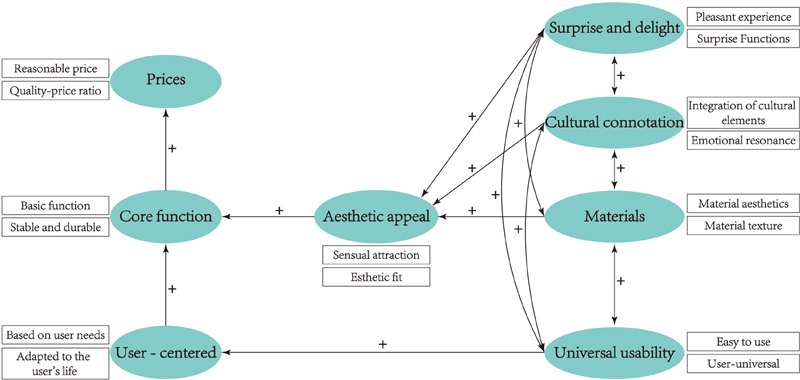
Evaluation Model for Emotional Design Elements of Product
5. Discussion
Based on the SEM analysis, the interrelationships among the eight design elements have been identified, as shown in Figure 3. These relationships highlight the complex dynamics behind user satisfaction and purchasing decisions, while also noting the influence of user experience. The interactions among design elements differ depending on product type, user characteristics, and contextual influence, leading to variations across scenarios and product categories. For instance, in personal electronics, “surprise and delight” may be more closely tied to “aesthetic appeal” and “materials” due to the emphasis on design innovation, whereas in industrial tools, “core function” and “universal usability” might play a dominant role to meet practical needs in demanding environments. This variability reflects the situational and product-specific nature of user experience.
Firstly, there is a positive correlation between “surprise and delight” and the elements of “cultural connotation,” “materials,” and “universal usability.” This suggests that when users experience positive surprise and delight from mobile products, their perceptions of cultural connotation, materials, and universal usability also improve. Similarly, a favorable perception of cultural connotation enhances users’ experiences of surprise and delight, as well as their appreciation for materials and universal usability. Additionally, satisfaction with materials boosts users’ surprise and delight, while simultaneously increasing their recognition of the product’s cultural connotation and universal usability. Likewise, satisfaction with universal usability fosters surprise and delight, further enhancing the positive perceptions of cultural connotation and materials.
On this basis, the elements of “surprise and delight,” “cultural connotation,” and “materials” positively influence aesthetic appeal. This implies that greater satisfaction in these three areas correlates with a stronger perception of a product’s aesthetic qualities. Furthermore, universal usability plays a crucial role in user-centered experiences; products that are easy to operate and universally applicable can enhance users’ trust and recognition of the “user-centered” concept, thereby reflecting the product’s alignment with user needs and lifestyles. Both user-centered and aesthetic appeal positively influence core function, indicating that these two elements can enhance users’ appreciation of core function. Among these, the influence of aesthetic appeal (Estimate = 0.433) is slightly greater than that of user-centered (Estimate = 0.36). This suggests that the visual and aesthetic alignment of the product is more effective in capturing users’ psychological engagement, thereby enhancing their perception of the significance of core function.
Furthermore, core function positively influences product price. This suggests that when users prioritize the essential needs and functional stability of mobile products, they tend to place greater emphasis on price rationality and cost-effectiveness.
Finally, the variable measuring material durability was removed due to its low correlation. This indicates that users prioritize aesthetics and texture when evaluating materials, while their concern for durability is comparatively minimal.
6. Conclusion
This study successfully developed a comprehensive evaluation model that integrates emotional and product design elements to identify key factors influencing users’ rational and emotional satisfaction and to explore how these factors impact purchasing decisions. By systematically analyzing the interrelationships and influence pathways among these elements, the study provides a scientific foundation for incorporating emotional and rational design considerations into product development to enhance consumer satisfaction and purchase intention.
The results indicate that emotional design elements—such as aesthetic appeal, cultural connotation, and surprise and delight—not only play a critical role in influencing users’ emotional satisfaction but also significantly impact their perception of rational product attributes, including core function and price. Furthermore, rational elements, such as universal usability and core function, act as mediators, bridging emotional satisfaction and purchase intentions. This highlights the dynamic interplay between emotional and rational elements in shaping user preferences.
By validating the model using Delphi and SEM methods, this study provides a scientific foundation for understanding how emotional and rational design elements collectively influence purchasing decisions. For instance, enhancing aesthetic appeal can amplify users’ appreciation of core function and perceived value, ultimately increasing their willingness to make a purchase. The findings also demonstrate that emotional design fosters stronger user engagement and loyalty, offering a competitive advantage in the market.
This study provides a solid foundation for exploring the interplay between emotional and rational design elements using mobile phones as a case study, but it also has certain limitations. First, extending the evaluation model to other product categories remains a critical area for future exploration. Given the broad applicability of PCS across various product domains, applying this model to diverse contexts is essential to validate the relationships among the eight design elements. Second, future research should address the dynamic interactions between user experience processes and design elements to ensure that design strategies are adaptable and relevant across different user scenarios, thereby further enhancing the model’s applicability.
Acknowledgments
This research was supported by BK21 Four Service Design based Glocal Social Innovation Educational Research Team in Dongseo University.
Notes
Copyright : This is an Open Access article distributed under the terms of the Creative Commons Attribution Non-Commercial License (http://creativecommons.org/licenses/by-nc/3.0/), which permits unrestricted educational and non-commercial use, provided the original work is properly cited.
References
-
Alonso-Rasgado, T., Thompson, G., & Elfström, B. O. (2004). The design of functional (total care) products. Journal of engineering design, 15(6), 515-540.
[https://doi.org/10.1080/09544820412331271176]

-
Allen, M. W., Gupta, R., & Monnier, A. (2008). The interactive effect of cultural symbols and human values on taste evaluation. Journal of Consumer Research, 35(2), 294-308.
[https://doi.org/10.1086/590319]
-
Ashby, M. F., & Johnson, K. (2013). Materials and design: the art and science of material selection in product design. Butterworth-Heinemann.
[https://doi.org/10.1016/B978-0-08-098205-2.00007-X]
- Allam, A. H., & Dahlan, H. M. (2013). User experience: challenges and opportunities. Journal of information systems research and innovation, 3(1), 28-36.
-
Alaniz, T., & Biazzo, S. (2019). Emotional design: The development of a process to envision emotion-centric new product ideas. Procedia Computer Science, 158, 474-484.
[https://doi.org/10.1016/j.procs.2019.09.078]
-
Brom, C., Starkova, T., & D'Mello, S. K. (2018). How effective is emotional design? A meta-analysis on facial anthropomorphisms and pleasant colors during multimedia learning. Educational Research Review, 25, 100-119.
[https://doi.org/10.1016/j.edurev.2018.09.004]
-
Chen, C. C., & Chuang, M. C. (2008). Integrating the Kano model into a robust design approach to enhance customer satisfaction with product design. International Journal of Production Economics, 114(2), 667-681.
[https://doi.org/10.1016/j.ijpe.2008.02.015]
-
Chitturi, R., Raghunathan, R., & Mahajan, V. (2008). Delight by design: The role of hedonic versus utilitarian benefits. Journal of Marketing, 72(3), 48-63.
[https://doi.org/10.1509/JMKG.72.3.048]
-
Chaudhuri, A., Aboulnasr, K., & Ligas, M. (2010). Emotional responses on initial exposure to a hedonic or utilitarian description of a radical innovation. Journal of Marketing Theory and Practice, 18(4), 339-359.
[https://doi.org/10.2753/MTP1069-6679180403]
-
Deng, L., Turner, D. E., Gehling, R., & Prince, B. (2010). User experience, satisfaction, and continual usage intention of IT. European Journal of Information Systems, 19(1), 60-75.
[https://doi.org/10.1057/ejis.2009.50]
- Desmet, P. M. (2012). Faces of product pleasure: 25 positive emotions in human-product interactions. International Journal of Design, 6(2).
-
Holbrook, M. B., & Schindler, R. M. (1994). Age, sex, and attitude toward the past as predictors of consumers' aesthetic tastes for cultural products. Journal of Marketing research, 31(3), 412-422.
[https://doi.org/10.1177/002224379403100309]
-
Herrmann, A., Huber, F., & Braunstein, C. (2000). Market-driven product and service design: Bridging the gap between customer needs, quality management, and customer satisfaction. International Journal of Production Economics, 66(1), 77-96.
[https://doi.org/10.1016/S0925-5273(99)00114-0]
-
Ho, A. G., & Siu, K. W. M. (2012). Emotion design, emotional design, emotionalize design: A review on their relationships from a new perspective. The Design Journal, 15(1), 9-32.
[https://doi.org/10.2752/175630612X13192035508462]
-
Homburg, C., Schwemmle, M., & Kuehnl, C. (2015). New product design: Concept, measurement, and consequences. Journal of Marketing, 79(3), 41-56.
[https://doi.org/10.1509/jm.14.0199]
-
Hassenzahl, M. (2018). The Thing and I: Understanding the relationship between user and product. In Blythe, M., & Monk, A. (Eds.), Funology 2: From Usability to Enjoyment (pp. 301-313). Springer International Publishing.
[https://doi.org/10.1007/978-3-319-68213-6_19]
-
Hofmann, J. (2024). Gamechanger Customization: Meeting growing customer demands through the propagated possibility of personalization and individualization. In Transformation im Consumer Sales: Innovative Unternehmenspraxis: Insights, Strategien und Impulse (pp. 237-250). Wiesbaden: Springer Fachmedien Wiesbaden.
[https://doi.org/10.1007/978-3-658-45174-5_16]
-
Ihtiyar, A. (2018). Interaction of intercultural service encounters: Personality, intercultural communication and customer satisfaction. Asia Pacific Journal of Marketing and Logistics, 30(1), 2-22.
[https://doi.org/10.1108/APJML-01-2017-0014]
-
Johnson, M. D., & Fornell, C. (1991). A framework for comparing customer satisfaction across individuals and product categories. Journal of Economic Psychology, 12(2), 267-286.
[https://doi.org/10.1016/0167-4870(91)90016-M]
-
Kumar, M., Townsend, J. D., & Vorhies, D. W. (2015). Enhancing consumers' affection for a brand using product design. Journal of Product Innovation Management, 32(5), 716-730.
[https://doi.org/10.1111/jpim.12245]
-
Kim, C., & Christiaans, H. H. (2016). The role of design properties and demographic factors in soft usability problems. Design Studies, 45, 268-290.
[https://doi.org/10.1016/j.destud.2016.04.006]
-
Lindgreen, A., & Vanhamme, J. (2003). To surprise or not to surprise your customers: The use of surprise as a marketing tool. Journal of Customer Behaviour, 2(2), 219-242.
[https://doi.org/10.1362/147539203322383573]
- Lo, K. P. Y. (2010). Emotional design for hotel stay experiences: Research on guest emotions and design opportunities.
-
Le, T. (2020). Strength from the past: How nostalgia and self-construal affect consumers' willingness to continue participating in sustainable behaviors. American Journal of Industrial and Business Management, 10(2), 432-450.
[https://doi.org/10.4236/ajibm.2020.102029]
-
Lottridge, D., Chignell, M., & Jovicic, A. (2011). Affective interaction: understanding, evaluating, and designing for human emotion. Reviews of Human Factors and Ergonomics, 7(1), 197-217.
[https://doi.org/10.1177/1557234X11410385]
-
Lin, T. C., Krishnan, A. U., & Li, Z. (2022). Intuitive, efficient and ergonomic tele-nursing robot interfaces: Design evaluation and evolution. ACM Transactions on Human-Robot Interaction (THRI), 11(3), 1-41.
[https://doi.org/10.1145/3526108]
-
McDonagh-Philp, D., & Lebbon, C. (2000). The emotional domain in product design. The Design Journal, 3(1), 31-43.
[https://doi.org/10.2752/146069200789393562]
-
McDonagh, D., Bruseberg, A., & Haslam, C. (2002). Visual product evaluation: exploring users' emotional relationships with products. Applied Ergonomics, 33(3), 231-240.
[https://doi.org/10.1016/S0003-6870(02)00008-X]
-
Maiocchi, M., & Pillan, M. (2011, June). Designing formal attributes and user experience in public services. In Proceedings of the 2011 Conference on Designing Pleasurable Products and Interfaces (pp. 1-8).
[https://doi.org/10.1145/2347504.2347574]
-
Miniero, G., Rurale, A., & Addis, M. (2014). Effects of arousal, dominance, and their interaction on pleasure in a cultural environment. Psychology & Marketing, 31(8), 628-634.
[https://doi.org/10.1002/mar.20723]
-
Moustafa, A. W. (2023). Integrating User Experience in Practices of Human-Centered Design Process in Product Design. International Design Journal, 13(5), 359-375.
[https://doi.org/10.21608/idj.2023.380528]
-
Nagamachi, M. (1995). Kansei engineering: A new ergonomic consumer-oriented technology for product development. International Journal of Industrial Engineering, 15, 3-11.
[https://doi.org/10.1016/0169-8141(94)00052-5]
- Norman, D. (2007). Emotional design: Why we love (or hate) everyday things. Basic Books.
-
Noble, C. H., & Kumar, M. (2008). Using product design strategically to create deeper consumer connections. Business Horizons, 51(5), 441-450.
[https://doi.org/10.1016/j.bushor.2008.03.006]
-
Oliver, R. L. (1980). A cognitive model of the antecedents and consequences of satisfaction decisions. Journal of Marketing Research, 17(4), 460-469.
[https://doi.org/10.1177/002224378001700405]
-
Plass, J. L., Heidig, S., Hayward, E. O., Homer, B. D., & Um, E. (2014). Emotional design in multimedia learning: Effects of shape and color on affect and learning. Learning and Instruction, 29, 128-140.
[https://doi.org/10.1016/j.learninstruc.2013.02.006]
-
Persada, A. G. (2018, October). Emotional design on user experience-based development system. In 2018 International Conference on Electrical Engineering and Computer Science (ICECOS) (pp. 225-230). IEEE.
[https://doi.org/10.1109/ICECOS.2018.8605199]
-
Pardini, S., Gabrielli, S., Dianti, M., Novara, C., Zucco, G. M., Mich, O., & Forti, S. (2022). The role of personalization in the user experience, preferences and engagement with virtual reality environments for relaxation. International Journal of Environmental Research and Public Health, 19(12), 7237.
[https://doi.org/10.3390/ijerph19127237]
-
Ruthven, I. (2021). Resonance and the experience of relevance. Journal of the Association for Information Science and Technology, 72(5), 554-569.
[https://doi.org/10.1002/asi.24424]
- Rane, N. L., Achari, A., & Choudhary, S. P. (2023). Enhancing customer loyalty through quality of service: Effective strategies to improve customer satisfaction, experience, relationship, and engagement. International Research Journal of Modernization in Engineering Technology and Science, 5(5), 427-452.
-
Shneiderman, B. (2000). Universal usability. Communications of the ACM, 43(5), 84-91.
[https://doi.org/10.1145/332833.332843]
-
Sun, T. S., & Han, X. (2010, June). Refinement of the customer satisfaction index for mobile phone service in China. In 2010 7th International Conference on Service Systems and Service Management (pp. 1-6). IEEE.
[https://doi.org/10.1109/ICSSSM.2010.5530144]
-
Sonderegger, A., & Sauer, J. (2010). The influence of design aesthetics in usability testing: Effects on user performance and perceived usability. Applied ergonomics, 41(3), 403-410.
[https://doi.org/10.1016/j.apergo.2009.09.002]
-
Steinfeld, E., & Smith, R. O. (2012). Universal design for quality of life technologies. Proceedings of the IEEE, 100(8), 2539-2554.
[https://doi.org/10.1109/JPROC.2012.2200562]
-
Shin, D. H. (2014). Measuring the quality of smartphones: development of a customer satisfaction index for smart services. International Journal of Mobile Communications, 12(4), 311-327.
[https://doi.org/10.1504/IJMC.2014.063650]
-
Still, M. L., & Still, J. D. (2018). Cognitively describing intuitive interactions. Intuitive Interaction: Research and Application, 41-62.
[https://doi.org/10.1201/b22191-3]
-
Shanahan, T., Tran, T. P., & Taylor, E. C. (2019). Getting to know you: Social media personalization as a means of enhancing brand loyalty and perceived quality. Journal of Retailing and Consumer Services, 47, 57-65.
[https://doi.org/10.1016/j.jretconser.2018.10.007]
-
Toufani, S., Stanton, J. P., & Chikweche, T. (2017). The importance of aesthetics on customers' intentions to purchase smartphones. Marketing Intelligence & Planning, 35(3), 316-338.
[https://doi.org/10.1108/MIP-12-2015-0230]
-
Tongsubanan, S., & Kasemsarn, K. (2024). Developing a design guideline for a user-friendly home energy-saving application that aligns with user-centered design (UCD) principles. International Journal of Human-Computer Interaction, 1-23.
[https://doi.org/10.1080/10447318.2024.2398324]
-
Udris-Borodavko, N., Oliinyk, V., Bozhko, T., Budnyk, A., & Hordiichuk, Y. (2023). Aesthetics and semiotics in 21st century visual communications: Pedagogical and sociocultural aspects. Research Journal in Advanced Humanities, 4(4), 22-40.
[https://doi.org/10.58256/rjah.v4i4.1144]