Integrating Generative AI into the Conceptual Design Process: A Case Study of Hydrogen-Powered Water Mobility
Abstract
Background Generative artificial intelligence (AI) is transforming art and design by enhancing aesthetics and shape grammar in ideation. However, its linear thinking limits handling ambiguous tasks without clear intent. Thus, designers’ expertise and evaluation are crucial for consistent, objective outcomes. This study examines generative AI in supporting concept development and visualization in early design stages.
Methods We derived three design concept keywords (hydrogen, waterborne, and mobility) through preliminary research and, based on these, curated AI images generated in Midjourney. Guided by the selected images, we modeled the form, then extracted and applied CMF (color, material, finish) schemes using Vizcom to refine the model, and produced the final design via rendering. The final proposal was evaluated through expert in-depth interviews and an online survey.
Results The Midjourney, Vizcom, and final design image went through a comparative evaluation on formal quality, colorfulness, feasibility, and novelty. The evaluation revealed that feasibility and formal quality were rated higher in human-refined designs, while colorfulness and novelty received lower ratings. Furthermore, tangible form-related keywords such as mobility, futuristic, and ferry scored significantly higher than abstract concepts such as eco-friendly public transportation, sustainability, and hydrogen energy.
Conclusions Generative AI supports form exploration and visual diversity in early ideation. However, feasibility and concept coherence rely on the designer’s critical judgment and selective refinement. To ensure meaningful outcomes, designers must properly handle the alignment of AI-generated results with the intended concept — an evaluative task beyond AI’s capability. Therefore, generative AI should serve as a supportive tool, while final design quality is ultimately shaped by the designer’s intent and interpretation.
Keywords:
Generative AI Design Tool, Design Process, Concept Design, Product Design, Hydrogen-Powered Waterborne Mobility1. Introduction
1. 1. Research Background and Purpose
Since the Dartmouth Conference in the 1950s, Artificial Intelligence (AI) has progressively expanded its role in creative and technical domains (Moor, 2006). Recent generative AI models—such as Midjourney, DALL·E, and Stable Diffusion—enable automated visual and textual content generation, engaging with imagination, emotion, and aesthetic judgment (Gozalo-Brizuela & Garrido-Merchan, 2023; Yin, Zhang, & Liu, 2023; Zhou & Lee, 2024). AI is thus shifting from a passive tool to an active collaborator, extending designers’ creative capabilities. Existing research on generative AI in design has largely emphasized concept-level outputs, with AI characterized as a subordinate performing high-level tasks (Bruemmer, Marble & Dudenhoeffer, 2002), a creative idea generator (Siemon, 2022), or a summarizer and evaluator across applications (Tan, Chen & Chua, 2023). While effective for ideation, few studies provide processes that link concept generation to executable or manufacturable designs, revealing a gap in integrating AI into the full design process.
Design inherently requires synthesizing creativity, functionality, and feasibility under contextual constraints. (Han, Forbes & Schaefer, 2021) Introducing AI raises new challenges: designers must determine how AI can accelerate ideation and contribute to downstream development. Current literature rarely addresses the integration of design concepts with holistic processes or the reconciliation of seemingly unrelated concepts within a coherent framework. This study investigates how generative AI can support the overall design process, bridging conceptual inspiration with practical outcomes. Using hydrogen-powered water mobility as a case study, the methodology demonstrates how AI can translate conceptual exploration into a consistent, feasible design pathway. Emphasizing the comprehensive design process, the study contributes to understanding how AI transforms both the concepts produced and the processes through which they evolve into practical solutions.
1. 2. Scope and Methodology
In the design process, the initial concept serves not only as the starting point for product development but also as a critical element in defining the overall direction of the design. However, initial concepts are often revised, diluted, or lost during later stages due to various contextual factors, and may not be fully reflected in the final product. This study aims to explore strategies for ensuring that the initial design concept is cohesively integrated into the final outcome using generative AI. To this end, it draws upon systematic design methodologies—such as Dresselhaus’s framework and the early-phase goals and functional requirements outlined in Design Innovation 1.0 by Pahl and Beitz—and examines how generative AI tools can be effectively utilized during the visualization phase to support this integration.
As illustrated in <Figure 1>, the generative AI-based design process is structured into five main stages. In the initial planning stage, the environmental context, service usage, and infrastructure of the Hangang River in Seoul were examined. Technical specifications related to the vessel and hydrogen fuel tank systems were also analyzed. Through this process, three core keywords—hydrogen, waterborne, and mobility—were identified and synthesized to formulate the central concept: a hydrogen-powered waterborne mobility system for the Hangang River.
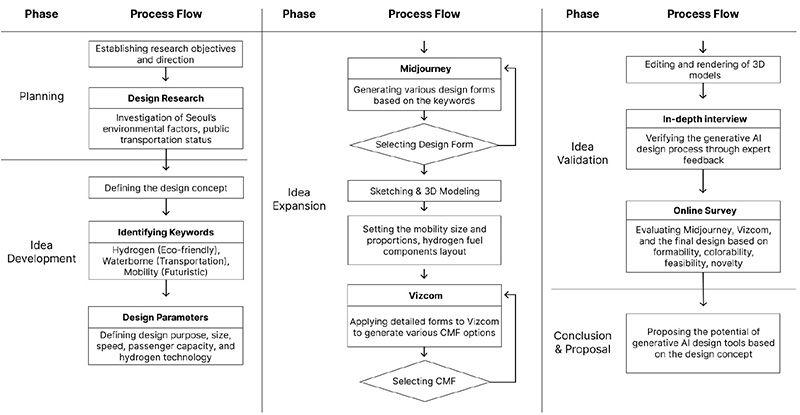
Design Process using Generative AI
In the ideation stage, Midjourney—a generative AI image-generation tool—was employed to produce a wide range of visual concepts aligned with the defined design direction. These AI-generated images served as the basis for developing 3D form models and layout compositions. In the idea expansion phase, CMF (Color, Material, Finish) attributes were further explored using Vizcom, drawing from the previously constructed 3D models. This phase was followed by expert interviews, which evaluated both the practical applicability and limitations of the proposed process, and assessed its feasibility within professional design practice.
In the conclusion and proposal phase, the images generated by Midjourney and Vizcom were compared with the designer-refined outcomes using four criteria: formal quality, colorfulness, feasibility, and novelty. To complement this comparison, an online survey was conducted to evaluate how closely aligned with the core conceptual keywords—mobility, ferry, eco-friendly, futuristic, public transportation, sustainability, and hydrogen energy—were reflected in the final design deliverables. This survey allowed for a closer examination of the differences between the AI-generated outcomes and the designer-refined results by gathering feedback from the young adults. The evaluation not only measured whether the designer-modified outputs aligned with the initial design concept but also verified the degree to which they embodied the concept keywords in their visual expression and associative coherence.
2. Theoretical Background
2. 1. Conceptual Design Process
Product design integrates industrial design, which focuses on external form and aesthetics, with engineering design, which ensures internal layout and functional performance (Horváth, 2004; Roozenburg & Eekels, 1995; Kim & Lee, 2010; Ullman, 2004; Yang & El-Haik, 2003; Pahl, Beitz, Wallace & Blessing, 2002; Dym, 1994). The design process translates customer needs into technical specifications, beginning with clarifying problems, identifying opportunities, and “listening to the voice of the customers.” Early specification development, typically led by engineers, is crucial for reducing costs, improving quality, and guiding effective concept generation. Concept design is central at this stage: multiple alternatives should be explored, and annotated sketches (Yang, 2009), expressive idea communication (Yang & Cham, 2007), early physical models (Häggman, Honda, & Yang, 2013), and parallel prototyping (Neeley, Lim, Zhu & Yang, 2013) have been shown to improve outcomes. Experts from consulting, academia, suppliers, or related industries provide specialized knowledge that strengthens solutions and directs design efforts productively. In practice, design teams often revise external forms based on internal performance, manufacturability, or spatial constraints, requiring repeated negotiation between designers and engineers. Designers pursue innovation and aesthetic refinement, while engineers emphasize functional feasibility and schedules, creating potential conflicts that necessitate early collaboration. While aesthetics matter, they are secondary to establishing a robust conceptual foundation, validated with customer feedback, expert input, and systematic concept development, ensuring that external and internal design elements are integrated effectively.
2. 2. Process of Using Text-to-Image AI Tools
As shown in <Table 1>, prior studies have proposed various AI utilization depending on their objectives and methodological frameworks. For instance, Kim, Lee, and Kim (2023) developed consistent visual styles in organic perfume packaging by embedding both emotional and visual keywords into Midjourney prompts. In contrast, Kim, Choi, Oh, Jeon, and Kim (2024) formulated prompts that reflected real-world user contexts by analyzing user needs and defining personas through the use of generative AI. Similarly, Barros and Ai (2024) enabled participants to independently define classification systems and generate prompts, thereby encouraging more creativity and diverse results. These cases show that prompts help clarify goals, structure user needs, and shape creative direction.

Generative AI Use Stages
While AI-generated outputs based on these prompts offer value in early-stage ideation, their applicability as finalized design solutions remains limited. For example, Kim, Choi, Oh, Jeon, and Kim (2024) enhanced the visual integrity of AI-generated robot scenario images by compositing specific screen elements and retouching unintended outputs using Photoshop. Similarly, Kim, Lee, and Kim (2023) synthesized and restructured Midjourney outputs to align with the brand’s visual identity. These cases show that designers must refine AI outputs through judgment and contextual adaptation to achieve complete, viable results. Additionally, different evaluation methods have also been proposed for selecting and assessing AI-generated design outputs. One approach involves subjective selection by the user through comparison (Kim, Lee, & Kim, 2023; Park & Heo, 2024), while another involves expert group evaluation and discussion of outputs generated by non-experts (Chong, Lo, Rayan, Dow, Ahmed, & Lykourentzou, 2025).
In summary, prior studies have highlighted both the effectiveness and the limitations of employing generative AI tools in design practice. On one hand, generative AI facilitates creative stimulation and helps mitigate design fixation (Lee & Chiu, 2023), enables rapid visualization and concretization of early-stage ideas (Barros & Ai, 2024), and serves as a source of visual inspiration during the ideation phase (Chung & Choi, 2025). On the other hand, difficulties in prompt formulation and the necessity for iterative refinement (Chung & Choi, 2025), as well as the production of structurally incomplete outcomes (Han, Choi & Oh, 2023). Together, these studies underscore that while AI can automate early design ideation, its effectiveness depends on deliberate prompt design, structured evaluation, and ongoing designer intervention.
3. Hydrogen-Powered Water Mobility Design
3. 1. Deriving Design Concept Keywords Through Research
Design activities are largely driven by subjective judgment and inherent sensibility, which often leads to significant uncertainty. To minimize such ambiguity and systematize the design process in a more logical and objective manner, it is crucial to understand the essence of actual design practice rather than relying solely on theoretical approaches (Kim, 2012). The design concept visualizes various elements such as form, function, structure, usage environment, and CMF (Color, Material, Finish) through keywords and images, thus providing a directional framework for product design (Na, 2024).
To establish the design concept, we conducted a comprehensive investigation into the necessity, current state, and practical feasibility of a new mode of public transportation, as summarized in <Table 2>. Based on this research, we identified three overarching themes: ‘eco-friendly’, ‘public transportation’, and ‘futuristic’. From these, we derived specific design concept keywords: ‘hydrogen fuel’, ‘waterborne’, and ‘mobility’. Furthermore, an analysis of Seoul’s existing public transportation usage and infrastructure revealed a saturation of land-based transit systems, highlighting the need for alternative transportation that leverages the geographical potential of the Hangang River.
Design Concept based Research
In addition to examining the three types of ferries currently operating on the Hangang River, we reviewed the specifications of approximately 40 waterbuses and riverbuses from six countries—Japan, the United States, the Netherlands, Russia, Germany, and the United Kingdom. Furthermore, data on approximately 50 catamarans and yachts and 10 hydrogen-powered ferries were analyzed based on key parameters such as length × width (L × W), passenger capacity, and cruising speed, as detailed in <Table 3>. Based on this analysis, a catamaran hull—recognized for its superior stability and buoyancy—was selected as the optimal ferry structure (Yoo, Kim, Kim, & Cho, 2020; Jung, 2010).
Ferry Specification Example
To ensure environmental sustainability, hydrogen fuel was selected as the energy source. A review of hydrogen-powered ferry case studies and component layout configurations indicated that hydrogen storage tanks occupy the greatest volume. Accordingly, based on energy density estimates and anticipated layout requirements, the placement and integration of the hydrogen tanks were strategically planned.
Ultimately, the overview of hydrogen-powered water mobility is illustrated in <Figure 2>. This envisions an integrated mobility service that connects seamlessly with existing urban infrastructure, addressing the limitations of current transportation systems while offering users a novel travel experience. Furthermore, it aims to establish a futuristic mobility environment by unifying the entire travel journey—from departure to final destination—into a seamless service, leveraging the Hangang River and existing water-based infrastructure. Through this approach, the project seeks to contribute to the development of a sustainable and eco-friendly urban environment.
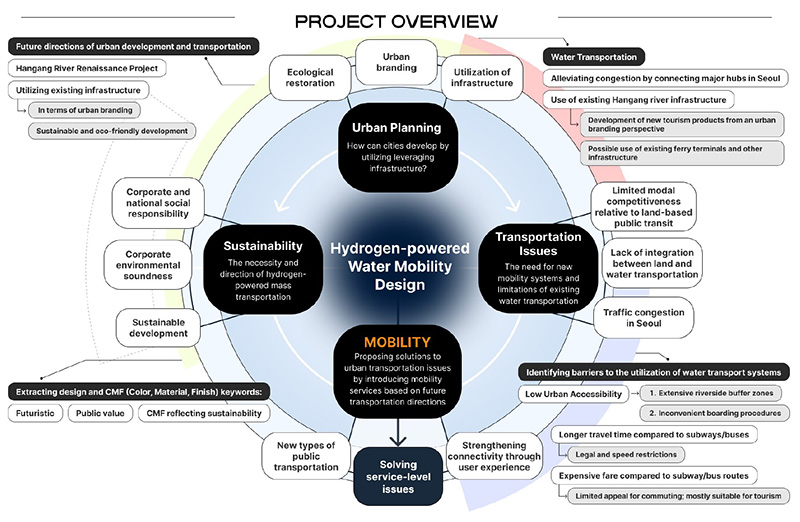
Hydrogen Water Mobility Overview
3. 2. Design Form Elements
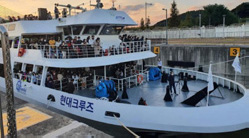
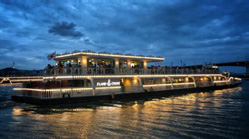
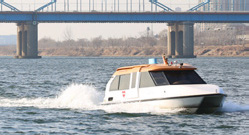
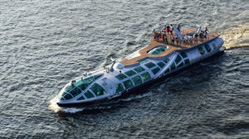
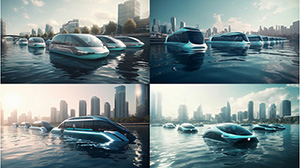
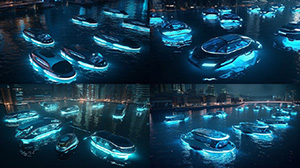
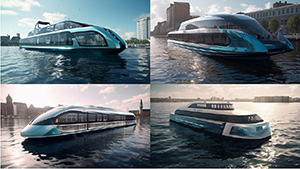
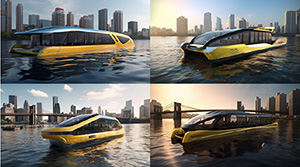
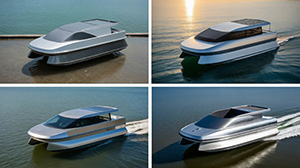
Based on the concept keywords hydrogen, waterborne, and mobility identified through prior research, approximately 300 images were generated using Midjourney. The images were produced using Midjourney Version 5 with a 16:9 horizontal aspect ratio, a configuration known for generating outputs in a realistic visual style. As the platform can generate visually diverse results from identical prompts, it was used as a visual ideation tool to support early-stage exploration of form and design direction (Kim, Choi, Oh, Jeon & Kim, 2024).
While the core concept keywords were retained, the prompts underwent iterative refinement to increase output accuracy and relevance. For example, including the term ‘hydrogen’ caused the model to generate a ferry that resembled a hydrogen cylinder tank rather than a ferry equipped with one. Although the model interprets ‘tank’ correctly, hydrogen biases the overall form and does not contribute meaningfully to the intended structural meaning. For this reason, the keyword ‘hydrogen’ was removed to prevent unintended shape distortion. These early outputs tended to adopt a science fiction–like aesthetic rather than that of feasible maritime transportation design.
To resolve these issues, industrial descriptors such as ‘polished metallic’ and ‘industrial surface finish’ were incorporated, shifting the visual tone toward a more grounded, premium industrial aesthetic. Form-related terminology—including ‘sleek catamaran hull’ and ‘multi-passenger ferry’—further improved proportional fidelity, correcting earlier distortions where the ferry appeared elongated, bullet-like, or structurally implausible. Additional structural descriptors—such as ‘cutting-edge frame’ and ‘visible structural logic’—helped counter renderings that resembled all-glass architecture lacking support, resulting in clearer articulation of load-bearing structures and engineering rationale.
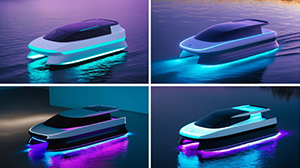
Through these iterative prompt adjustments, Midjourney’s tendency toward stylized or fantastical forms was progressively moderated. The resulting outputs demonstrated realistic scale, coherent design language, functional detailing, and visual alignment with sustainable maritime mobility principles. The final images presented in <Table 4> were selected based on their novelty relative to existing ferry typologies and their alignment with the envisioned futuristic public transport direction.
Midjourney Image Examples
This trial-and-error process also revealed limitations in the model’s ability to accurately respond to user intent, particularly when prompts referenced unfamiliar typologies or emerging mobility formats. Similar observations have been reported in previous studies, where the model failed to reflect user-intended visual features due to limited training data on specific form categories (Kim, Lee, & Kim, 2023; Park & Heo, 2024). In this study, form-focused prompts were primarily employed, with occasional inclusion of color and lighting cues to improve visual completeness.
① 3D Modeling
Based on the reviewed research cases, the ferry was designed to accommodate up to 100 passengers and achieve a maximum speed of 27 knots (approximately 50 m/s). The vessel’s dimensions were defined as 9 meters in width, 22 meters in length, and 4 meters in height. In alignment with these proportions, selected design form elements extracted from Midjourney-generated images were synthesized and applied in the development of a 3D model using Rhino 8, as illustrated in <Figure 3>. The design incorporated continuous glazing along the front and side surfaces to provide passengers with expansive views of the urban panorama, while a separated rear roof structure was introduced to channel natural daylight into the interior space.
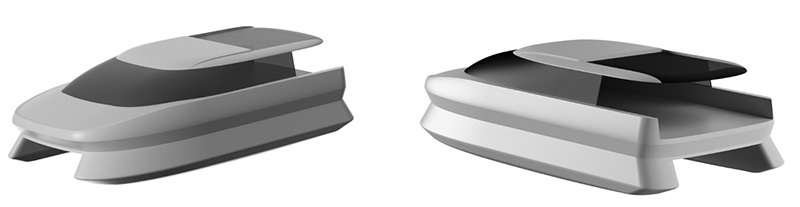
Initial Modeling
② Hydrogen Tank Size and Placement
Through design research, it was confirmed that among the core components of a hydrogen fuel cell system, the hydrogen storage tank occupies the largest volume. As this has a direct impact on the vessel’s overall form, reference was made to catamaran-based ferries and yachts capable of achieving speeds of 27 knots (approximately 50 m/s) to estimate an appropriate value. Assuming an energy demand equivalent to 4,000 L of gasoline, the estimated hydrogen tank volume was calculated to be 15.78 m³, based on hydrogen’s energy density (2.43 kWh/L) and gasoline (12.78 kWh/kg). This calculation guided decisions on both the number and size of the hydrogen tanks.
Given the potential intrusion of hydrogen tank placement into the interior space, a 1/20 scaled low-fidelity prototype was created to consider options among the possible placement scenarios (e.g., front, sides) and volume of hydrogen tank. As shown in <Figure 4>, testing revealed that front placement of two hydrogen tanks was the most suitable configuration. Each tank measures 1.6 meters in diameter and 4 meters in length.
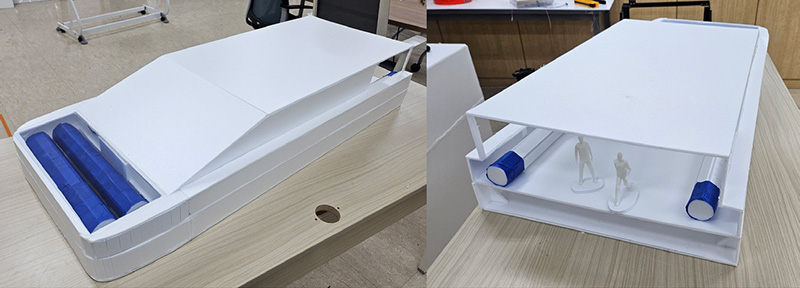
Scale Prototype
③ Layout of Hydrogen Fuel Components
The primary components required for hydrogen-based propulsion include hydrogen tanks, DC/AC converters, fuel cells, and batteries—components that are commonly utilized in hydrogen-powered automotive systems. All components except the hydrogen tanks were arranged in the lower hull to optimize stability, as shown in <Figure 5>. The suitability of this component layout was subsequently evaluated through expert interviews.
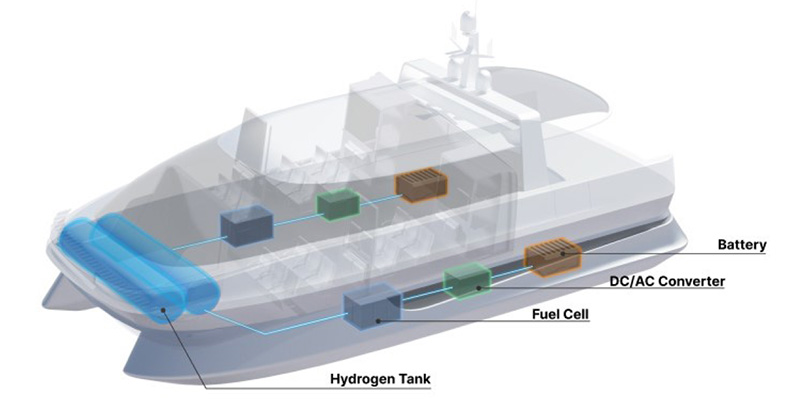
Main Hydrogen Fuel Layout
3. 3. CMF Elements
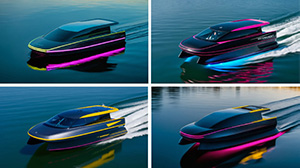
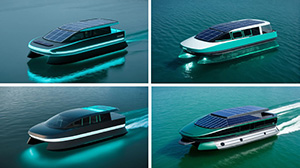
Based on the finalized 3D form model, CMF (Color, Material, Finish) visualizations were developed using Vizcom. The primary purpose of employing Vizcom was to assess detailed visual attributes—including color application, material selection, surface finish, and textural effects—while maintaining fidelity to the underlying geometry of the 3D model. Image generation was conducted using Version 2 of Vizcom, configured at a resolution of 1920 × 1080, utilizing Realistic Product mode with the Drawing Influence parameter set to 80%.
Whereas Midjourney functioned as a tool for broad conceptual form exploration, Vizcom served as a refinement environment dedicated to translating the finalized form into CMF-focused outcomes. A range of color, material, and finish options—including ‘black carbon fiber’, ‘matte silver’, and ‘rugged metallic’ treatments—was systematically evaluated to determine whether the generated surface expressions aligned with the desired design language. Similarly, initial attempts to express ecological or technological characteristics through prompts such as ‘eco-friendly’ and ‘sustainability’ produced unintended results, including wooden hull surfaces or solar panels mounted on the roof. These visually distracting elements were replaced by ‘brushed metal textures’ and ‘chrome accents’, which conveyed a contemporary, advanced aesthetic without compromising visual unity.
Iterative prompt adjustments were applied to improve semantic clarity and achieve stronger visual alignment with the intended design direction. For example, early prompts referencing terms such as ‘LED colors’ and ‘illuminating edges’ resulted in lighting elements being rendered in impractical locations—such as beneath the hull—leading to unrealistic configurations. Revising these descriptors to ‘ambient LED light’ and ‘tracing its curves’ repositioned the lighting to the forward hull section, improving both functional plausibility and visual coherence.
The 3D model was developed to predetermined dimensions (9 m × 22 m × 4 m). A simplified monochromatic rendering, excluding material assignments and color information, was provided as input to the Vizcom system. Based on this model, approximately 200 CMF‑focused variations were generated. Image selection followed the same evaluative criteria applied during the Midjourney phase, prioritizing alignment with project intent and distinctiveness relative to existing maritime mobility typologies. Representative examples of the Vizcom outputs are presented in <Table 5>.
Vizcom Image Examples
Based on the selected Vizcom-generated images, the 3D model was revised to incorporate detailed form elements, while specific color, material, and texture components were applied using KeyShot 2024 for final rendering. In this process, additional design details absent from the Vizcom outputs were also integrated. Consistent with prior research highlighting the necessity of direct designer intervention to ensure the faithful realization of intended design concepts, even when employing generative AI tools (Chon & Yeoun, 2019; Han, Choi, & Oh, 2023; Hwang, 2023), the designer manually refined the model to maintain alignment with the original design intent. The design featured a light signature extending from front to sides with a roof-mounted light bar for enhanced visibility. A character line along the side profile added dynamism, while the equipment was integrated into a bridge-type frame from the side pillars. A matte silver body with brushed-metal garnish along the beltline was emphasized.
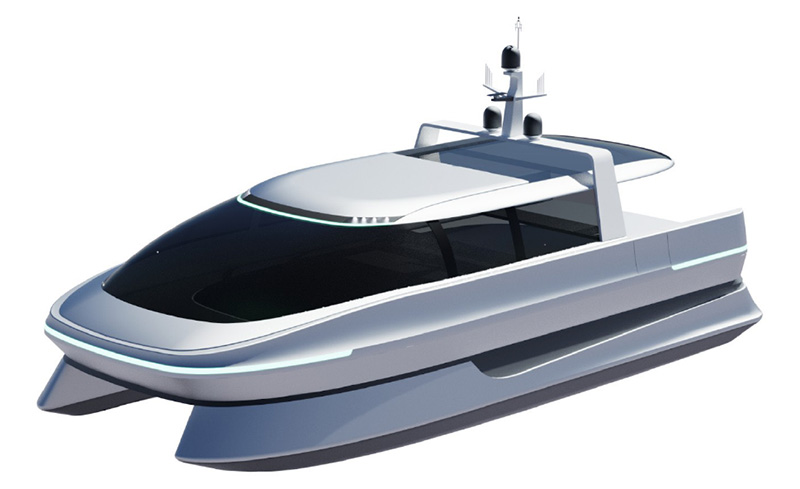
Final Rendering
4. Evaluation Results
4. 1. Expert Interviews on the Gen AI Tool-Based Design Process
In-depth interviews were conducted with five professional designers and three hydrogen system engineers. Professional designers were interviewed regarding the overall design process utilizing AI tools, the formal completeness of the final design outcomes, their technical feasibility, and potential directions for future improvement.
The insights provided by hydrogen system engineers directly informed the refinement of design feasibility. Specifically, engineers emphasized weight distribution and tank placement as key determinants of vessel stability. Consequently, the final concept adopted an upper-deck hydrogen tank configuration to ensure both accessibility and safety, aligning with engineers’ recommendations. This demonstrates the interdependence of aesthetic ideation and engineering feasibility within the AI-assisted design process. While generative AI facilitated early visualization, engineering validation grounded these concepts in practical implementation, illustrating a complementary relationship between AI-generated creativity and technical realism.
In-depth Interview Participation Expert Information
In-depth interviews were conducted with five designers using a semi-structured questionnaire comprising four key categories: overall evaluation of the design process, assessment of form and aesthetics, evaluation of technical feasibility, and suggestions for improvements. These interviews yielded qualitative insights from each designers regarding the AI-assisted design workflow. Based on these insights, meaningful implications for the future application of AI in design processes were identified.
Additionally, three hydrogen system engineers were interviewed using a questionnaire focused on the technical validity and feasibility of the ferry design. This allowed the collection of expert opinions from a technological perspective, particularly concerning the practical implementation of the proposed design.
The interview responses were categorized and summarized according to question items, as shown in <Table 7>. The table was organized by clustering recurring expert opinions, and key insights were extracted from the aggregated responses. Through this analysis, the applicability and limitations of the AI-based design process were examined from both designer and engineer perspectives. Furthermore, practical directions for improvement were identified based on qualitative data.
Result of The In-depth Interview
4. 2. Survey Results
Even when concept keywords are employed, AI-generated images may visually diverge from a design’s intended concept. To address this issue, an evaluation with the young adults was conducted to determine whether the final designs not only adhered to the proposed concept and demonstrated practical feasibility, but also achieved a level of form and color quality comparable to the AI-generated images, while simultaneously embodying novelty as original design outcomes. A total of five images generated using Midjourney and Vizcom were selected to serve as visual reference materials. Utilizing these AI-generated images as a basis, final design outcomes were developed and subsequently subjected to quantitative evaluation. The primary objective of this evaluation was to examine the differences and similarities between the AI-generated outputs and the finalized design results. In order to assess the degree of consistency and alignment between the final designs and the initially defined design concept, an evaluation was additionally conducted using a predefined set of conceptual keywords. The keywords employed in this assessment were as follows: ‘mobility’, ‘ferry’, ‘eco-friendly’, ‘futuristic’, ‘public transportation’, ‘sustainability’, and ‘hydrogen energy’.
The selected keywords served as the conceptual basis for evaluating the relevance and appropriateness of the final design outcomes. To systematically assess the visual quality of the generated images, four quantitative evaluation criteria were employed, as presented in <Table 8>. These criteria included ‘formal quality’, ‘colorfulness’, ‘feasibility’, and ‘novelty’, each representing a distinct dimension of the design’s formal attributes, functional practicality, and creative originality. The evaluation categories were derived from relevant prior literature and were intended to provide a comprehensive assessment framework for the AI-generated design outputs.
Defining Evaluation Criteria
Chong, Lo, Rayan, Dow, Ahmed, and Lykourentzou (2024) emphasized that the application of generative AI tools in design space exploration may result in varying levels of ‘novelty’, ‘feasibility’, and ‘aesthetic’, contingent upon the design strategy employed. As identified in prior studies (Mukherjee & Chang, 2023; Shah, Smith, & Vargas-Hernandez, 2003; Bloch, Brunel, & Arnold, 2003; Burnap, Hauser, & Timoshenko, 2021; Lo, Ko, & Hsiao, 2015), ‘novelty’ is recognized as a primary indicator of creativity and innovation in design. ‘Feasibility’ denotes the extent to which a design adheres to physical and technical constraints, reflecting its potential for practical implementation. ‘Aesthetic’, meanwhile, is closely associated with consumer perception and plays a critical role in determining a product’s likelihood of market acceptance.
Based on the core metrics of ‘novelty’, ‘feasibility’, and ‘aesthetic’, the AI-generated outputs were subjected to a structured analysis. In order to more comprehensively evaluate the external characteristics and visual completeness of the design outcomes, the additional criteria of ‘formal quality’ and ‘colorfulness’ were incorporated into the assessment framework. The detailed definitions of each evaluation criterion are provided in the following table.
Following the completion of the survey, the reliability of the evaluation items was assessed using Cronbach’s alpha, conducted through the SPSS statistical analysis software. Additionally, the mean and standard deviation for each evaluation criterion were calculated in order to facilitate a quantitative analysis of the results.
The survey was administered online, and the demographic characteristics of the participants are summarized in <Table 9>. In addition to basic demographic information, data were collected on participants’ experience with AI tools, duration of usage, and primary application purposes. A majority of respondents (86.2%) indicated Midjourney as their primary generative AI tool, followed by DALL·E, Vizcom, and Adobe Firefly. In terms of proficiency, 37.9% of participants reported having used AI tools for a period ranging from one to two years. Most respondents indicated a usage frequency of approximately two times per week. In terms of usage purpose, 69% of participants reported utilizing AI tools for work-related tasks or design projects, whereas the remaining respondents indicated their use was primarily for personal hobbies or creative endeavors.
Demographic Analysis of Participants
To verify the consistency of participant responses in the survey, a reliability analysis was performed using Cronbach’s alpha through IBM SPSS Statistics. All evaluation items demonstrated reliability coefficients exceeding 0.6, indicating an acceptable level of internal consistency. Reliability was assessed independently for each evaluation criterion—’formal quality’, ‘colorfulness’, ‘feasibility’, and ‘novelty’—based on AI-generated images from Midjourney and Vizcom. The results are summarized in <Table 10>.
Results of Cronbach’s alpha Reliability Analysis
The reliability of the key variables used in this study was acceptable. No items were identified that compromised internal consistency; therefore, all items were retained for further analysis.
The mean scores and standard deviations for the evaluations of the Midjourney, Vizcom, and final design outputs are presented in <Table 11>. Overall, the average scores for Vizcom were lower than those for Midjourney. Among the evaluation criteria, formal quality (M=3.46, SD=1.01) of the final output received a relatively high score, whereas colorfulness (M=2.91, SD=0.98) was rated comparatively low. Feasibility (M=3.37, SD=1.00) scored relatively high, reflecting the incorporation of real-world ferry components and the deliberate emphasis on feasibility during the AI image selection process. In contrast, novelty (M=2.63, SD=0.72) received a comparatively lower score, likely due to the prioritization of practicality over conceptual originality.
Midjourney, Vizcom, and Final Results Analysis Results
To examine the extent to which the initially defined concept keywords were reflected in the final design output, scores were assigned to each keyword, and mean values were calculated. The keyword ‘ferry’ (M=4.11, SD=1.00) received the highest score, followed closely by ‘mobility’ (M=4.09, SD=0.76), indicating strong conceptual alignment in these areas. In contrast, ‘eco-friendly’ (M=2.71, SD=1.02) and ‘sustainability’ (M=2.66, SD=0.92) showed relatively low average scores. The detailed results for each keyword are summarized in <Table 12>.
Final Results Keyword Analysis Results
5. Discussion
5. 1. Effectiveness of Concept Direction Reflection in Design
Survey responses underscored the increasing integration of generative AI tools within professional design workflows. Against this backdrop, the present study investigated the degree to which AI-generated outcomes reflected the intended design concept. As indicated in Cronbach’s alpha, the reliability values for both MidJourney and Vizcom exceeded 0.6. Since all reliability measures were above this threshold, it can be inferred that the five selected image sets were generally consistent with the established design direction.
It is further revealed that the distributions of formal quality scores for MidJourney, Vizcom, and the final results were broadly consistent. In particular, the reliability of the formal quality evaluations for both MidJourney and Vizcom surpassed 0.7 across all assessment categories. This suggests that the generated forms achieved formal coherence. By contrast, colorfulness and novelty received comparatively lower scores. This outcome may reflect constraints in the designer’s expertise rather than inherent limitations of the AI tools themselves. While other designers might produce different results, the effectiveness of AI tools depends on the user’s proficiency. With enhanced competence in applying such tools, designers may be able to overcome these deficits and employ AI as a means to elevate overall design quality.
Importantly, the final design outcome, refined by the designer, was rated as more feasible than the AI-generated alternatives. This highlights the value of designer intervention, where human judgment contributed to greater technical realism and structural soundness. These findings align with the argument of Hosanagar and Ahn (2024), who contend that designer input plays a more critical role than AI in enhancing the functional credibility of AI-generated outputs. Therefore, it is essential for designers to preserve the design concept while exercising personal judgment when employing AI-generated images as references, ensuring that the creative process balances computational efficiency with human discernment.
5. 2. Applicability of Generative AI in Early Design Visualization
Through the research process, core conceptual keywords were identified and translated into prompts for generative AI, resulting in the production of visualized image outputs. These visual elements were subsequently incorporated into the final design, and their alignment with the initial design concept was evaluated. Keywords associated with tangible forms such as ‘mobility’ (M=4.09, SD=0.76) and ‘ferry’ (M=4.11, SD=1.00), exhibited strong alignment with the design intent, validating the capacity of generative AI to effectively visualize abstract conceptual inputs and to support early-stage design communication and concept articulation. In contrast, keywords such as ‘eco-friendly’ (M=2.71, SD=1.02) and ‘hydrogen energy’ (M=3.03, SD=1.00) received low relevance scores. This outcome may be attributed to expert insights emphasizing the importance of incorporating symbolic visual elements—such as exposed hydrogen tanks—to enhance the legibility of concepts like hydrogen energy. Expert interviews further indicated that elements such as ‘‘eco-friendly’ and ‘sustainability’ are also difficult for professional designers to express visually. These elements may be communicated instead through service-oriented appeals or by highlighting environmentally friendly materials via special surface treatments to make them visually distinctive. However, it must also be technically verified whether such approaches are genuinely eco-friendly, rather than merely offering aesthetic impressions. These observations indicate a potential need to integrate information design and communication strategies to improve the visual conveyance of abstract or intangible themes. As noted by Borgo, Kehrer, Chung, Laramee, Hauser, Ward, and Chen (2013), abstract concepts are inherently challenging to depict visually, often requiring symbolic or semiotic devices for effective representation. Likewise, broader systemic concepts such as ‘public transportation’ (M=2.83, SD=1.22) and ‘sustainability’ (M=2.66, SD=0.92) also received lower relevance scores. According to Hansson (2020), such themes are inherently multi-dimensional, encompassing components such as service structures, infrastructure, and operational systems, which complicates their representation through straightforward visual imagery. These findings suggest that the design development may benefit from the integration of both visual elements and functional or service-oriented components to effectively communicate complex themes.
5. 3. Applicability of AI design process
To evaluate the practical applicability of the generative AI-driven design process, expert interviews were conducted. Building on these differing perspectives, the results further showed that generative AI facilitates accelerated ideation and enhances visual diversity during the early stages of design development. While generative AI is effective in generating visual concepts and supporting preference testing, subjective evaluation and interpretation by the designer remain crucial for making styling decisions and refining outcomes. When designers confront the challenge of determining what or how to create, the use of AI-generated imagery as a reference can be highly meaningful. As, the final outcome is heavily influenced by the criteria with which designers select from these AI-generated options. Despite their value as a conceptual tool, AI images lack dimensional accuracy and structural constraints, rendering them unsuitable for direct application in mass production.
These findings underscore the necessity of integrating engineering validation within AI-driven conceptual workflows. The engineer interviews highlighted how AI-generated outputs, although visually compelling, often neglect load distribution, maintenance access, and component integration. By incorporating engineering feedback during refinement, the final design transitioned from an imaginative visualization to a physically feasible configuration, bridging the gap between speculative ideation and executable design.
Consequently, it becomes the responsibility of the designer to synthesize these abstract visual references with considerations of material feasibility, technical constraints, and usability. This limitation further underscores the necessity of interdisciplinary collaboration, particularly with engineering and marketing teams, to ensure that creative visions informed by AI can be translated into viable, market-ready products. The interviews revealed that designer and engineer experts hold very different perspectives on feasibility. As a result, engineers considered feasibility as visually expressed through product-specific characteristics such as the location of ventilation, detachable structures for maintenance, or a hydrogen fueling port. A designer’s perspective usually regards points such as the parting line of the exterior of the water mobility, whereas an engineer’s perspective focuses on mechanical tolerances and dimensional accuracy. As Archer (1964) emphasized, designers must develop strategies that integrate materials, processes, and structural considerations through active engagement with domain experts.
6. Limitations
Several limitations should be acknowledged, as they may influence both the generalizability and interpretation of the research findings. First, as a case-based study involving the researcher’s direct participation in the role of designer, the research is susceptible to potential bias arising from subjective interpretations and experiential influence throughout the process. Moreover, the quality of AI-generated outputs is highly dependent on the designer’s ability to construct effective prompts, which may compromise consistency and objectivity across results (Jung & Kim, 2022). Second, although generative AI is capable of rapidly producing visually compelling outcomes often surpassing those of human designers in areas such as striking and precise color combinations, stylistic expression, and rendering quality (Burnap, Hauser, & Timoshenko, 2021) it remains limited in tasks that require dimensional accuracy, engineering constraints, and safety validation in design process. These limitations stem from the absence of professional judgment and the holistic design competence necessary to ensure structural integrity and production feasibility. Third, generative AI demonstrates limited capacity to account for socio-cultural contexts and legal regulations. As Prabhakaran, Qadri, and Hutchinson (2022) point out, over reliance on AI-exclusive design can hinder the social acceptability of service components due to a lack of cultural congruence. This is particularly relevant in product design domains involving public transportation and public infrastructure, where social sensitivity and regulatory compliance are critical. Accordingly, the inclusion of diverse designers and user groups is essential for evaluating the varied design processes and outcomes enabled by generative AI.
7. Conclusion
The hydrogen-powered waterborne case study demonstrates that generative AI is particularly effective in facilitating form exploration and enhancing visual diversity, both of which contribute meaningfully to concept development and early-stage visualization. These findings suggest that generative AI should not be regarded as an autonomous creative agent but rather as an auxiliary tool that supports the designer’s interpretive judgment and decision-making (Chompunuch & Lubart, 2025). This perspective underscores the importance of designerled planning and refinement, particularly in sustainable design contexts, as it enhances both feasibility and conceptual coherence. As Cooper, Junginger, and Lockwood (2009) argue, the design process relies heavily on designers’ creative judgment, integrative thinking, and strategic planning competencies. In this context, redefining the role of the designer is essential to ensure that human expertise complements and guides the use of generative AI tools in a purposeful and context-sensitive manner. Weisz, He, Muller, Hoefer, Miles, and Geyer (2024) similarly note that generative AI faces fundamental limitations in visualizing intangible elements such as user experience (UX), social demand, and value-driven concepts—areas that must be proactively defined and integrated by designers themselves. Building on this, Muehlhaus and Steimle (2024) emphasize that strategic decision-making and the clear articulation of the designer’s role are critical in shaping outcomes within the AI-assisted design process. Likewise, Hong, Hakimi, Chen, Toyoda, Wu, and Klenk (2023) argue that while generative AI can be effective during the ideation and visualization stages, expert collaboration is essential for validating its outputs in practice. Our study on hydrogen, waterborne mobility, and sustainability demonstrates that generative AI applications can extend beyond these domains and be integrated with other design concepts, and while this research focused on Midjourney and Vizcom, it suggests that other AI tools could similarly be leveraged, highlighting the need for future studies on practical strategies for integrating generative AI with design process.
Acknowledgments
This work was supported by the Industrial Technology Innovation Program(20023835, 미래 라이프스타일을 고려한 X care 컨셉 기반 지능형 모빌리티(제품 및 서비스) 플랫폼 로봇 디자인 개발) funded By the Ministry of Trade, Industry & Energy (MOTIE, Korea)
Notes
Copyright : This is an Open Access article distributed under the terms of the Creative Commons Attribution NonCommercial License (http://creativecommons.org/licenses/by-nc/3.0/), which permits unrestricted educational and non-commercial use, provided the original work is properly cited.
References
- Archer, L. B. (1964). Systematic Method for Designers. London: Council of Industrial Design.
-
Barros, M., & Ai, Q. (2024). Designing with words: exploring the integration of text-to-image models in industrial design. Digital Creativity, 35(4), 378-391.
[https://doi.org/10.1080/14626268.2024.2411223]

-
Bloch, P. H., Brunel, F. F., & Arnold, T. J. (2003). Individual differences in the centrality of visual product aesthetics: Concept and measurement. Journal of Consumer Research, 29(4), 551-565.
[https://doi.org/10.1086/346250]
-
Bruemmer, D. J., Marble, J. L., & Dudenhoeffer, D. D. (2002). Mutual initiative in human-machine teams. In Proceedings of the IEEE 7th conference on human factors and power plants, 7-7.
[https://doi.org/10.1109/HFPP.2002.1042863]
-
Borgo, R., Kehrer, J., Chung, D. H., Maguire, E., Laramee, R. S., Hauser, H., Ward M., & Chen, M. (2013). Glyph-based Visualization: Foundations, Design Guidelines, Techniques and Applications. In Eurographics (state of the art reports), 39-63.
[https://doi.org/10.2312/conf/EG2013/stars/039-063]
-
Burnap, A., Hauser, J. R., & Timoshenko, A. (2021). Design and evaluation of product aesthetics: A human-machine hybrid approach. Available at SSRN 3421771.
[https://doi.org/10.2139/ssrn.3421771]
-
Chompunuch, S., & Lubart, T. (2025). AIas a helper: Leveraging generative AI tools across common parts of the creative process. Journal of Intelligence, 13(5), 57.
[https://doi.org/10.3390/jintelligence13050057]
-
Chon, W., & Yeoun, M. (2019). A case study of AI-driven generative logo design: Compared with the traditional logo design production. Journal of Korea Design Forum, 63, 171-181.
[https://doi.org/10.21326/ksdt.2019.24.2.015]
-
Chong, L., Lo, I. P., Rayan, J., Dow, S., Ahmed, F., & Lykourentzou, I. (2024). Prompting for products: Investigating design space exploration strategies for text-to-image generative models. Design Science, 11, e2.
[https://doi.org/10.1017/dsj.2024.51]
-
Chung, E., & Choi, J. (2025). Improvement directions of image generation AI to support product ideation. Archives of Design Research, 38(1), 179-196.
[https://doi.org/10.15187/adr.2025.02.38.1.179]
-
Cooper, R., Junginger, S., & Lockwood, T. (2009). Design thinking and design management: A research and practice perspective. Design Management Review, 20(2), 46-55.
[https://doi.org/10.1111/j.1948-7169.2009.00007.x]
- Dresselhaus, B. (2000). ROI: Return On Innovation. Portland: Dresselhaus Design Group Inc.
-
Dym, C. L. (1994). Teaching design to freshmen: Style and content. Journal of Engineering Education, 83(4), 303-310.
[https://doi.org/10.1002/j.2168-9830.1994.tb00123.x]
-
Gozalo-Brizuela, R., & Garrido-Merchan, E. C. (2023). ChatGPT is not all you need. A State of the Art Review of large Generative AI models. arXiv:2301.04655.
[https://doi.org/10.48550/arXiv.2301.04655]
-
Häggman, A., Honda, T., & Yang, M. C. (2013). The influence of timing in exploratory prototyping and other activities in design projects. In International Design Engineering Technical Conferences and Computers and Information in Engineering Conference, 55928, V005T06A023.
[https://doi.org/10.1115/DETC2013-12700]
-
Han, D., Choi, D., & Oh, C. (2023). A study on user experience through analysis of the creative process of using image generative AI: Focusing on user agency in creativity. The Journal of the Convergence on Culture Technology, 9(4), 667-679.
[https://doi.org/10.17703/JCCT.2023.9.4.667]
-
Han, J., Forbes, H., & Schaefer, D. (2021). An exploration of how creativity, functionality, and aesthetics are related in design. Research in Engineering Design, 32(3), 289-307.
[https://doi.org/10.1007/s00163-021-00366-9]
-
Hanafy, N. O. (2023). Artificial intelligence's effects on design process creativity: A study on used AI text-to-image in architecture. Journal of Building Engineering, 80, 107999.
[https://doi.org/10.1016/j.jobe.2023.107999]
-
Hansson, L. (2020). Visual representation inurban transport planning: Where have all the cars gone?. Transportation Research Part A: Policy and Practice, 133, 1-11.
[https://doi.org/10.1016/j.tra.2019.11.027]
-
Hong, M. K., Hakimi, S., Chen, Y. Y., Toyoda, H., Wu, C., & Klenk, M. (2023). Generative AI for product design: Getting the right design and the design right. arXiv:2306.01217.
[https://doi.org/10.48550/arXiv.2306.01217]
- Horváth, L., & Rudas, I. J. (2004). Behavior and design intent based product modeling. Acta Polytechnica Hungarica, 1(2), 17-34.
-
Hosanagar, K., & Ahn, D. (2024). Designing Human and Generative AI Collaboration. arXiv:2412.14199.
[https://doi.org/10.48550/arXiv.2412.14199]
-
Hwang, Y. (2023). The usage of generative AI in poster design. Archives of Design Research, 36(4), 291-309.
[https://doi.org/10.15187/adr.2023.11.36.4.291]
-
Jung, C. (2010). The research for process of hull form design. Journal of Korea Design Forum, 26, 149-160.
[https://doi.org/10.21326/ksdt.2010..26.014]
-
Jung, S., & Kim, H. (2022). A study on generative design expression elements and preference evaluation: Focusing on visual evaluation factors of products. Journal of the Korean Society of Design Culture, 28(1), 427-438.
[https://doi.org/10.18208/ksdc.2022.28.1.427]
-
Kim, K. (2012). Empirical approach to cognitive process for problems of marine design. The Journal of the Korea Contents Association, 12(12), 126-134.
[https://doi.org/10.5392/JKCA.2012.12.12.126]
- Kim, K., & Lee, K. P. (2010). Two types of design approaches regarding industrial design and engineering design in product design. In DS 60: Proceedings of DESIGN 2010, 1795-1806.
-
Kim, Y., Choi, H., Oh, A., Jeon, H., & Kim, K. (2024). Exploring the potential of generative AI in UX practice: A case study on scenario development for large indoor facility robots. Design Works, 7(1), 29-44.
[https://doi.org/10.15187/dw.2024.03.7.1.29]
-
Kim, Y., Lee, J., & Kim, Y. (2023). A study on ways to integrate organic perfume package design into beauty major education using generative AI. Journal of the Korean Society of Cosmetology, 13(3), 541-551.
[https://doi.org/10.23351/kscc.13.3.202312.014]
-
Lee, Y. H., & Chiu, C. Y. (2023). The impact of AI text-to-image generator on product styling design. International Conference on Human-Computer Interaction, 502-515.
[https://doi.org/10.1007/978-3-031-35132-7_38]
-
Lo, C. H., Ko, Y. C., & Hsiao, S. W. (2015). A study that applies aesthetic theory and genetic algorithms to product form optimization. Advanced Engineering Informatics, 29(3), 662-679.
[https://doi.org/10.1016/j.aei.2015.06.004]
-
Moor, J. (2006). The Dartmouth College artificial intelligence conference: The next fifty years. AI magazine, 27(4), 87.
[https://doi.org/10.1609/aimag.v27i4.1911]
-
Muehlhaus, M., & Steimle, J. (2024). Interaction Design with Generative AI: An Empirical Study of Emerging Strategies Across the Four Phases of Design. arXiv:2411.02662.
[https://doi.org/10.48550/arXiv.2411.02662]
- Mukherjee, A., & Chang, H. H. (2023, July). Managing the creative frontier of generative AI: The novelty-usefulness tradeoff. California Management Review. Retrieved from https://cmr.berkeley.edu/2023/07/managing-the-creative-frontier-of-generative-ai-the-novelty-usefulness-tradeoff/.
-
Na, H. (2024). A study on the use of generative AI prompts based on the product design concept: Focusing on generated an image of a home super automatic espresso machine using Midjourney. Journal of Cultural Product & Design, 76, 191-202.
[https://doi.org/10.18555/kicpd.2024.76.017]
-
Neeley Jr, W. L., Lim, K., Zhu, A., & Yang, M. C. (2013). Building fast to think faster: exploiting rapid prototyping to accelerate ideation during early stage design. In international design engineering technical conferences and computers and information in engineering conference, 55928, V005T06A022.
[https://doi.org/10.1115/DETC2013-12635]
-
Paananen, V., Oppenlaender, J., & Visuri, A. (2024). Using text-to-image generation for architectural design ideation. International Journal of Architectural Computing, 22(3), 458-474.
[https://doi.org/10.1177/14780771231222783]
- Pahl, G., Beitz, W., Wallace, K., & Blessing, L. (2002). Engineering design: A systematic approach. London: Springer.
-
Park, S., & Heo, J. (2024). Designing user interaction for variation functions in image generative AI to reflect user intentions. Journal of Industrial Design Studies, 18(1), 15-31.
[https://doi.org/10.37254/ids.2024.03.67.02.15]
-
Prabhakaran, V., Qadri, R., & Hutchinson, B. (2022). Cultural in congruencies in artificial intelligence. arXiv:2211.13069.
[https://doi.org/10.48550/arXiv.2211.13069]
- Roozenburg, N. F., & Eekels, J. (1995). Product design: fundamentals and methods. New York: Wiley.
-
Siemon, D. (2022). Elaborating team roles for artificial intelligence-based teammates in human-AI collaboration. Group Decision and Negotiation, 31(5), pp.871-912.
[https://doi.org/10.1007/s10726-022-09792-z]
-
Shah, J. J., Smith, S. M., & Vargas-Hernandez, N. (2003). Metrics for measuring ideation effectiveness. Design Studies, 24(2), 111-134.
[https://doi.org/10.1016/S0142-694X(02)00034-0]
-
Shin, J., & Lee, J. (2023). An approach to utilizing generative AI for spatial design visualization based onspace identity: Focused on the implementation of space identity visualization model and its application in the early design phase. Journal of the Korean Institute of Interior Design, 32(6), 26-36.
[https://doi.org/10.14774/JKIID.2023.32.6.026]
-
Tan, S. C., Chen, W. & Chua, B. L. (2023). Leveraging generative artificial intelligence based on large language models for collaborative learning. Learning: Research and Practice, pp.1-10.
[https://doi.org/10.1080/23735082.2023.2258895]
- Ulman, D. G. (2004). The mechanical design process. Hightstown: McGraw-Hill.
- Ulrich, K. T., Eppinger, S. D., & Yang, M. C. (1995). Product design and development. New York: McGraw-hill.
-
Weisz, J. D., He, J., Muller, M., Hoefer, G., Miles, R., & Geyer, W. (2024). Design principles for generative AI applications. Proceedings of the 2024 CHI Conference on Human Factors in Computing Systems, 1-22.
[https://doi.org/10.1145/3613904.3642466]
- Yang, K., & El-Haik, B. S. (2003). Design for Six Sigma: A roadmap for product development. McGraw-Hill.
-
Yang, M. C., & Cham, J. G. (2007). An analysis of sketching skill and its role in early stage engineering design. ASME J. Mech. Des., 129(5), 476-482.
[https://doi.org/10.1115/1.2712214]
-
Yang, M. C. (2009). Observations on concept generation and sketching in engineering design. Research in Engineering Design, 20(1), 1-11.
[https://doi.org/10.1007/s00163-008-0055-0]
-
Yin, H., Zhang, Z., & Liu, Y. (2023). The exploration of integrating the Midjourney artificial intelligence generated content tool into design systems to direct designers towards future-oriented innovation. Systems, 11(12), 566.
[https://doi.org/10.3390/systems11120566]
-
Yoo, S., Kim, M., Kim, C., & Cho, J. (2020). Analysis of eco-friendly camping boat design elements for domestic marine leisure industry activation. Journal of Basic Design & Art, 21(1), 347-360.
[https://doi.org/10.47294/KSBDA.21.1.26]
-
Zhou, E., & Lee, D. (2024). Generative artificial intelligence, human creativity, and art. PNAS nexus, 3(3).
[https://doi.org/10.1093/pnasnexus/pgae052]